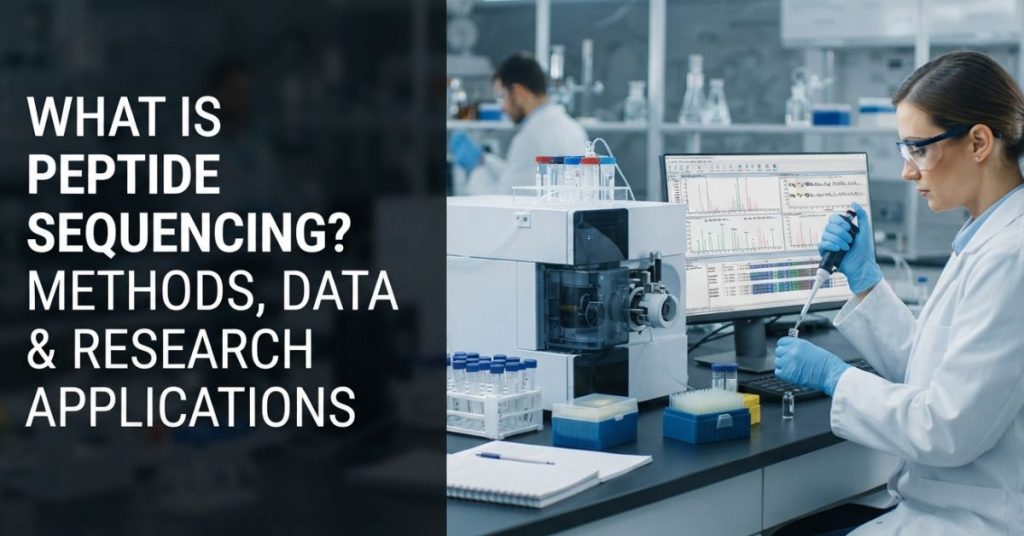
A peptide may be present in a sample, but researchers still need a way to determine which amino acids make it up and the order in which they appear. That order can provide important information about the material being examined and whether it matches an expected sequence. Understanding what peptide sequencing is starts with this […]
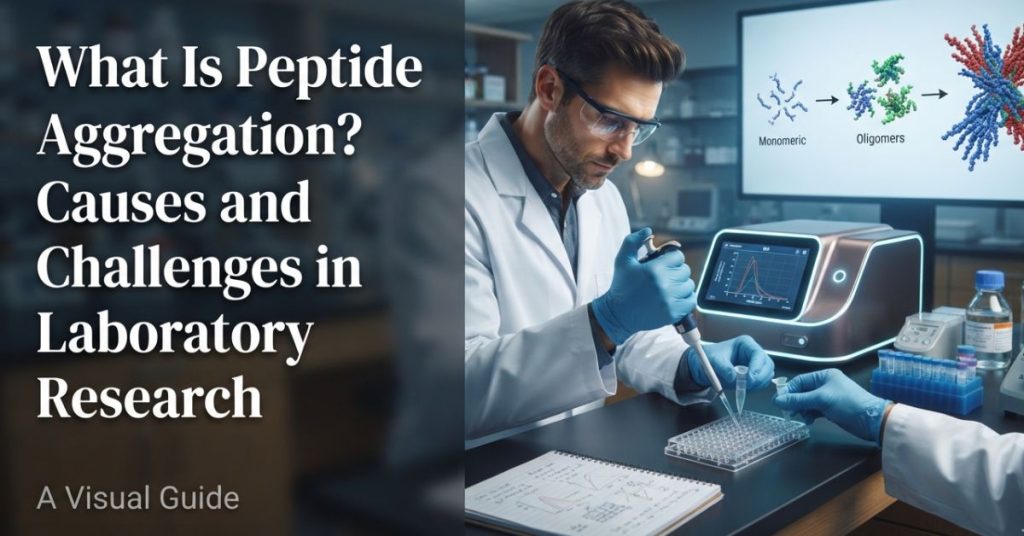
A peptide may behave as expected after synthesis, but that can change once it is dissolved or stored. The solution might become cloudy, small particles may appear, or the peptide may give different results after sitting for some time. Sometimes, nothing looks unusual at all. This can happen because of peptide aggregation. Peptide molecules that […]
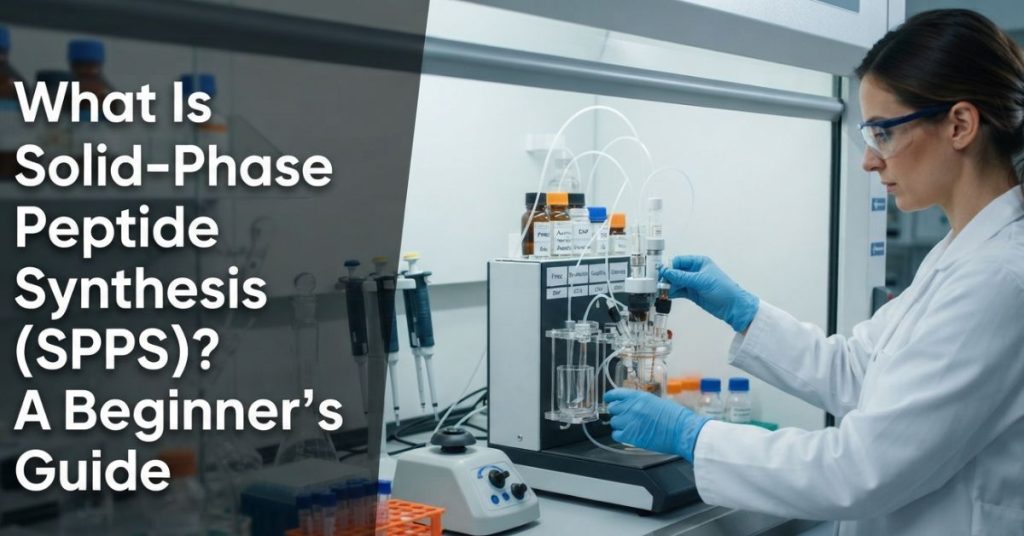
Making a peptide in the laboratory means joining amino acids in a specific order. Doing that one amino acid at a time may sound straightforward, but each addition has to happen at the right place without unwanted reactions interfering with the growing sequence. Solid-phase peptide synthesis, usually shortened to SPPS, gives researchers a controlled way […]
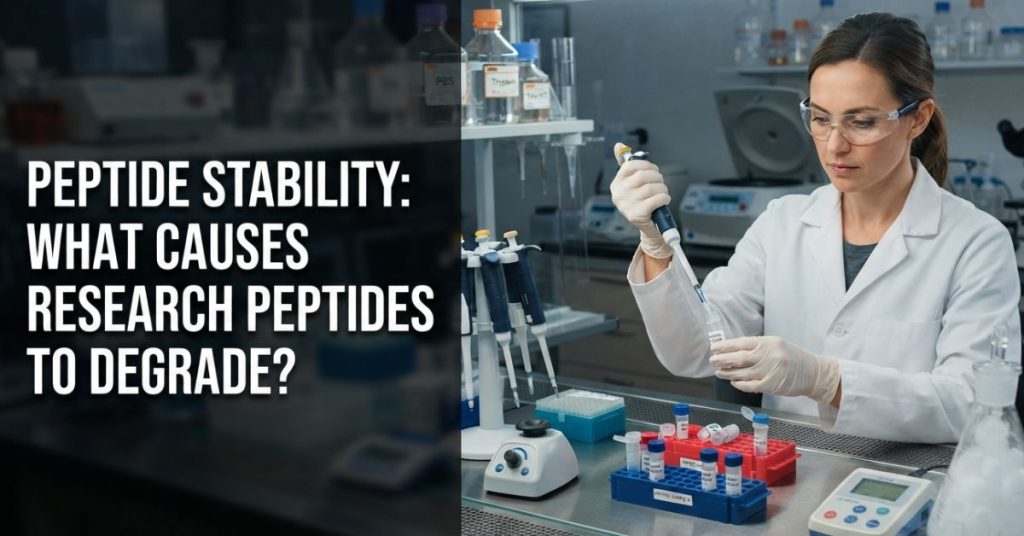
Peptides can change over time, but the rate and type of change are not the same for every compound. Temperature, moisture, oxygen, pH, light, and routine laboratory handling can all influence how well a peptide maintains its original form. Understanding peptide stability is therefore an important part of working with research materials. Knowing what encourages […]
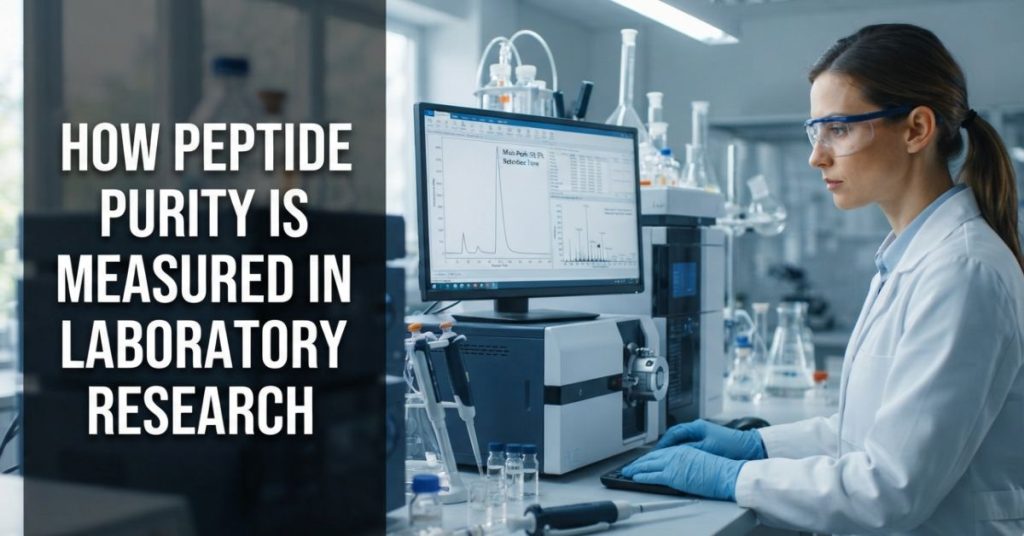
A label showing “99% pure” can seem pretty clear at first. You might read it and assume that 99% of everything in the vial is the peptide you are looking for. But in laboratory testing, that number tells a more specific story. Researchers use analytical tools to see what is actually present in a sample […]
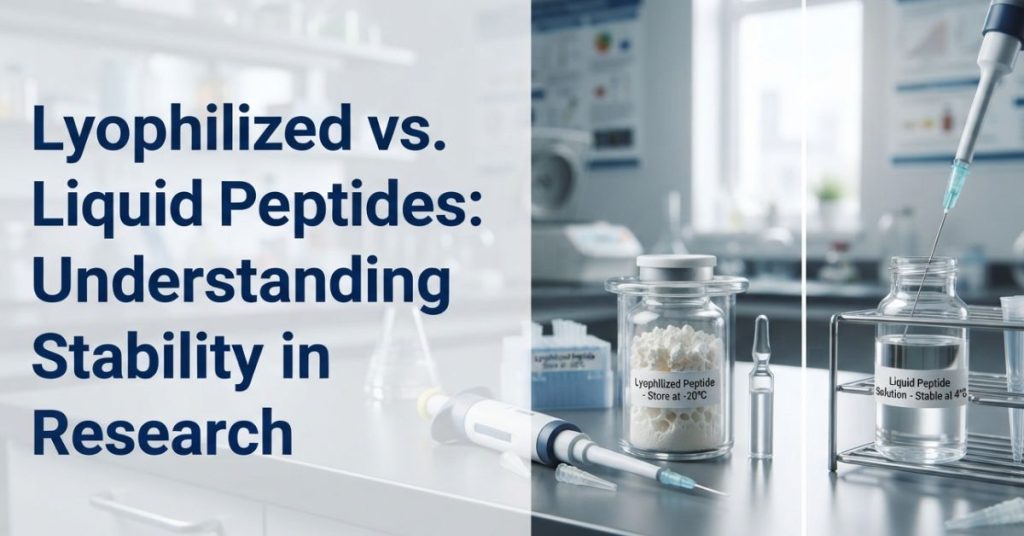
A peptide can exist as a dry material or as part of a prepared solution, and that difference is more important than it may first appear. Adding liquid does not simply change how the sample looks. It changes the environment surrounding the peptide molecules. That is why the lyophilized vs. liquid peptides comparison matters in […]
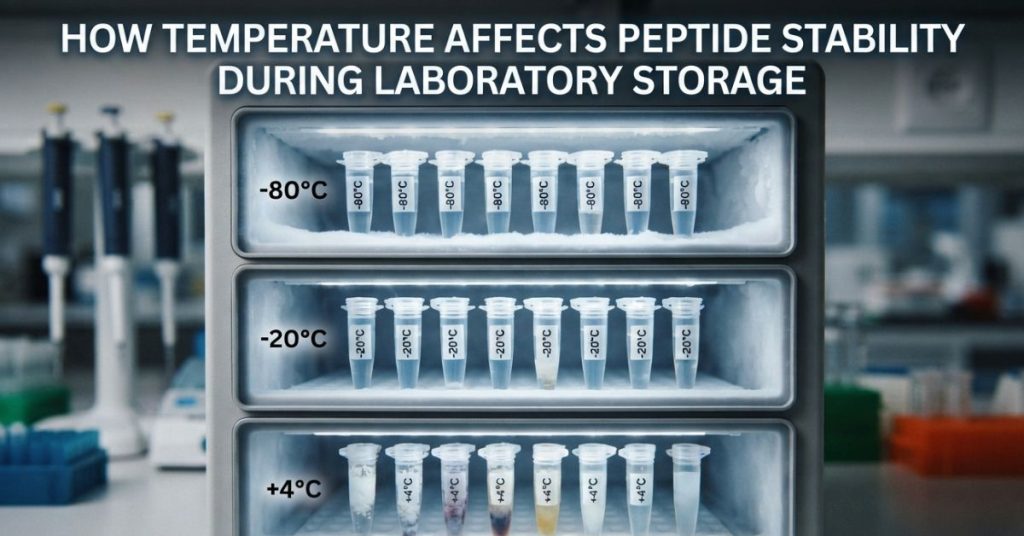
Temperature is one of the main environmental factors that can influence peptides while they are stored in a laboratory. Too much heat can speed up chemical changes, while colder conditions can slow many reactions. However, choosing a peptide storage temperature is not as simple as placing every compound in a refrigerator or freezer. The appropriate […]
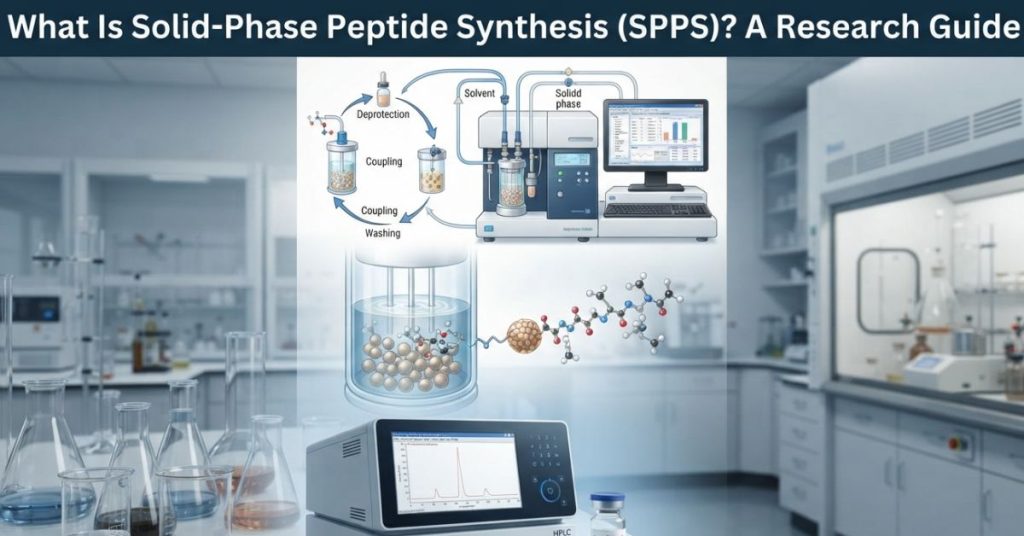
Creating a peptide in the laboratory involves joining amino acids in a precise sequence. Doing this efficiently becomes more difficult as the chain grows because researchers also need to separate the developing peptide from unused reagents and reaction byproducts. Solid-phase peptide synthesis offers a practical way to manage this process. The method keeps the growing […]
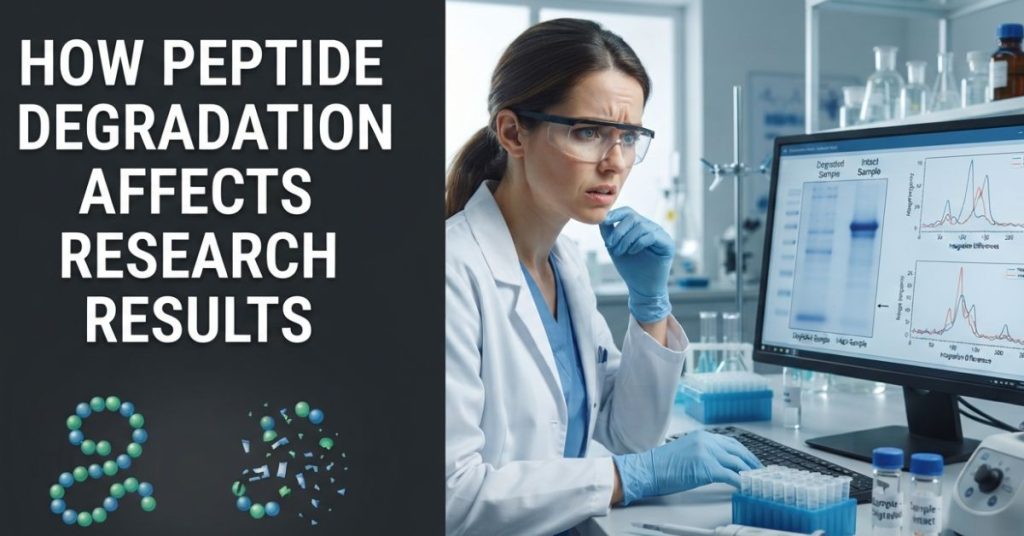
A peptide does not always show obvious signs when it begins to change. A sample may look perfectly normal, even though small changes have already taken place in its chemical makeup. In research, this can become a problem because reliable results depend on using material that remains consistent throughout the study. Peptide degradation may leave […]

When evaluating a research peptide, the purity percentage is often one of the first details researchers notice. A Certificate of Analysis (COA) may display a result such as 98%, 99%, or higher, but understanding what that number actually represents requires more than looking at the percentage alone. Research peptide purity is commonly assessed using High-Performance […]