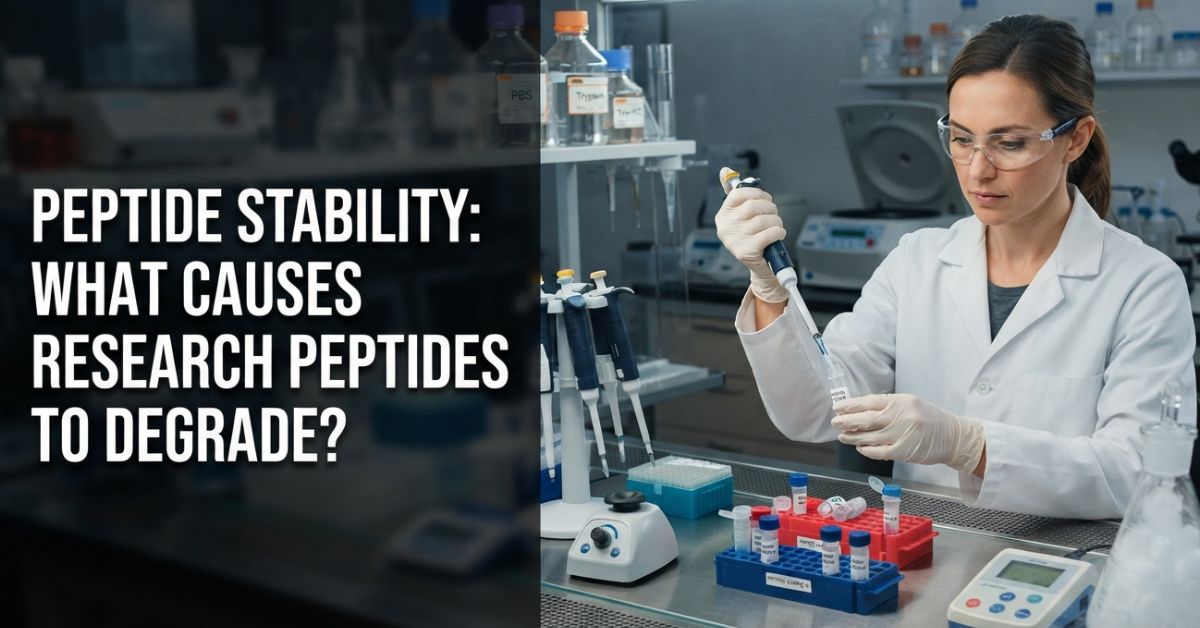
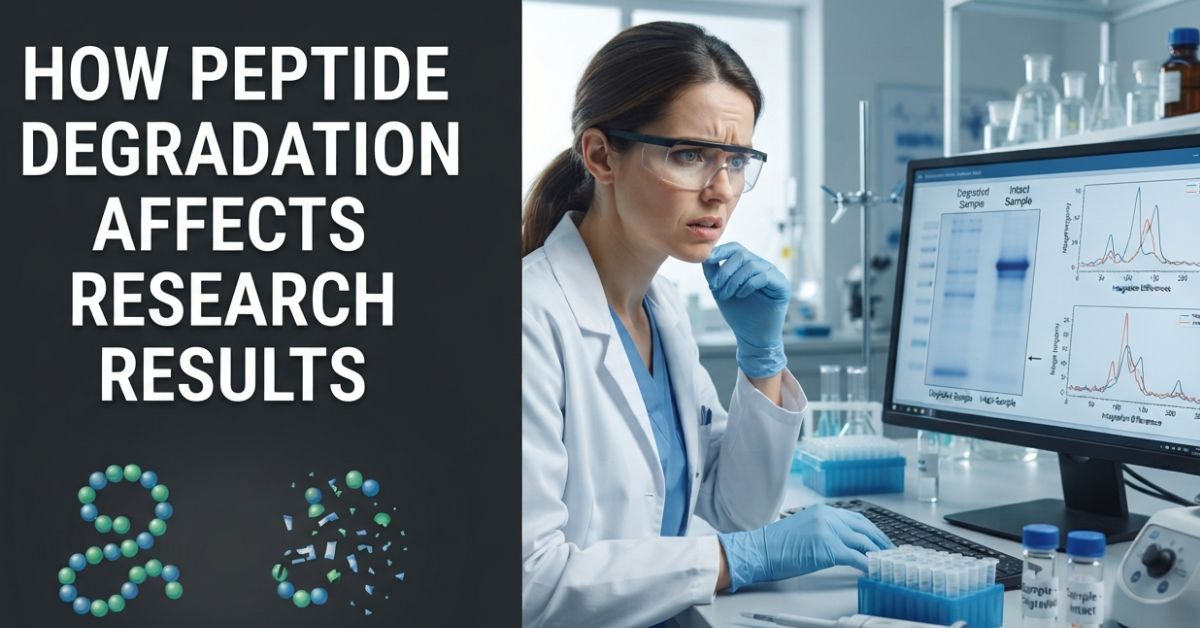
A peptide does not always show obvious signs when it begins to change. A sample may look perfectly normal, even though small changes have already taken place in its chemical makeup. In research, this can become a problem because reliable results depend on using material that remains consistent throughout the study.
Peptide degradation may leave less of the original peptide in the sample while also producing unwanted breakdown products. These changes can affect experimental data in different ways, from weaker-than-expected responses to unusual differences between repeated tests. When results suddenly become inconsistent, checking the condition of the peptide can help researchers understand whether the issue lies with the experiment or the sample being used.
What Peptide Degradation Means in Laboratory Research?
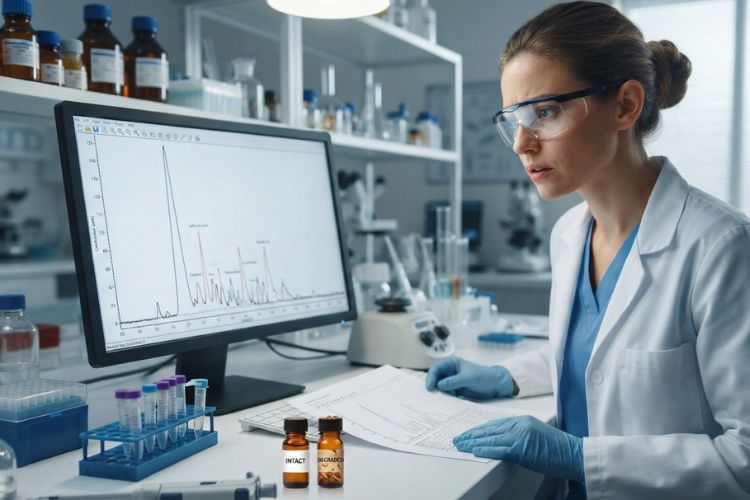
Peptides are chains of amino acids held together by peptide bonds. These molecules can change over time, particularly when they are exposed to certain storage conditions or go through repeated preparation and handling. Peptide degradation refers to the different chemical or physical changes that can affect the peptide’s original form.
Not every peptide responds to its surroundings in the same way. Its amino acid sequence, formulation, temperature, moisture exposure, and handling history can all influence how well it holds up over time. As a result, peptide stability needs to be considered for the specific compound rather than treated as the same across every peptide.
Why Degraded Peptides Can Change Experimental Results
Even a carefully planned experiment can produce unexpected data if the peptide itself has changed. Researchers may follow the same procedure each time, but differences in sample quality can introduce another variable into the study.
Degradation can affect a sample in several ways:
- Reduced intact peptide: Some of the original peptide may break down, leaving less unchanged material available for the experiment.
- Formation of byproducts: As the peptide changes, additional compounds may form that were not part of the original sample.
- Different sample properties: Changes to the molecular structure may influence characteristics such as solubility or how the peptide interacts within an assay.
This means identical laboratory procedures do not always guarantee comparable results. If the starting samples are in different conditions, those differences may also be reflected in the final data.
What Degradation Can Look Like in Research Data
Degradation does not create one distinctive pattern in experimental results. Sometimes the first clue is simply that the data no longer behave as expected.
A response may become weaker, replicate samples may show greater variation, or an earlier experiment may suddenly become difficult to reproduce. These problems have many possible explanations, so sample deterioration should not automatically be assumed.
However, when instruments, procedures, and other variables appear consistent, peptide degradation is one factor worth investigating.
What Causes Peptides to Degrade?
The main peptide degradation causes involve both the compound itself and its surroundings. Heat, moisture, oxygen, light, pH, and storage duration can influence chemical changes, although their importance varies between peptides.
Physical form also makes a difference. A dry preparation does not behave exactly like the same compound in solution. What Are Lyophilized Peptides? explains how freeze-drying removes water and creates a different environment for storing research material.
Among the possible pathways, oxidation and hydrolysis are two commonly discussed processes.
Peptide Oxidation
Peptide oxidation occurs when susceptible parts of the molecule undergo oxidative modification. Certain amino acid residues are more vulnerable, making the sequence itself an important factor.
Oxygen exposure, trace metals, light, and other environmental conditions can contribute in some situations. Because peptide oxidation may happen without a visible change, analytical testing is often needed to identify it.
Peptide Hydrolysis
Peptide hydrolysis involves chemical bond cleavage through a reaction with water. Factors such as pH, temperature, sequence, and time can influence how readily it occurs.
This becomes particularly relevant once a peptide is in solution. Still, peptide hydrolysis does not proceed at the same rate in every sample, so compound-specific information remains important.
When Can Degradation Happen?
Changes can occur at several points between receiving a peptide and completing an experiment. Long-term storage is only one part of the picture.
Possible situations include:
- unsuitable storage conditions
- preparing or diluting samples
- prolonged laboratory handling
- repeated warming and cooling
- multiple freeze-thaw cycles
Looking at the complete history of a sample can help researchers identify possible peptide degradation causes instead of focusing only on where the material was stored.
Why a Peptide Can Look Normal and Still Be Different
Cloudiness, precipitation, or other visible changes can indicate a problem, but a clear sample does not always mean its original condition has been preserved. Some chemical changes happen at the molecular level without affecting appearance.
Looking at a peptide sample only tells part of the story. It might seem perfectly fine, yet small changes could already be happening at the molecular level. Because these changes are easy to miss, researchers use analytical tests to get a better idea of how well the peptide is holding up over time.
How Researchers Check Peptide Integrity?
Researchers can examine peptide samples in several ways. HPLC is commonly used to see how pure a sample is by separating its components. Mass spectrometry, on the other hand, helps verify the peptide’s molecular weight and identity.
So, HPLC vs mass spectrometry is not really about choosing one over the other. Each reveals something different about the sample.
Researchers may also analyze peptides at different points during an experiment. This makes it easier to notice whether storage, preparation, or handling has altered the sample.
Keeping Degradation From Becoming a Research Variable
Good laboratory practice aims to keep avoidable differences between samples to a minimum. Following compound-specific guidance, limiting unnecessary environmental exposure, and recording how materials are handled can help maintain consistency.
The relevant peptide degradation causes vary between compounds, so one storage or handling routine should not automatically be applied to every material.
For studies requiring dry research materials, researchers can explore available lyophilized peptides while reviewing the information provided for individual products.
Why Sample Integrity Matters for Reproducible Research?
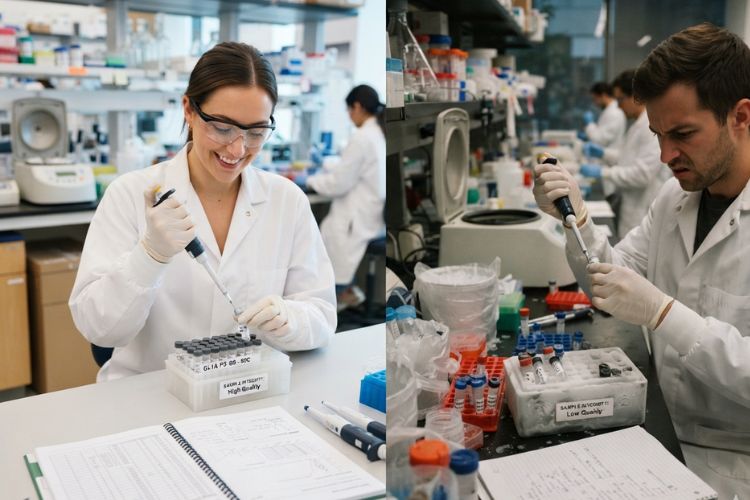
Repeating an experiment is only useful when researchers can trust the material they are working with. Even when the same equipment and procedure are used, a change in sample condition can shift the outcome.
Keeping peptide samples properly characterized gives researchers a clearer reference point when comparing studies. It also makes unusual findings easier to trace and reduces the chance that changes in the material are mistaken for a true experimental response.
Conclusion
Reliable research depends on more than following the same experimental procedure. The condition of the material entering that experiment matters as well.
Changes in a peptide may occur without obvious visual signs, which makes careful handling, appropriate storage, good documentation, and analytical assessment valuable parts of laboratory work. Recognizing peptide degradation as a possible source of variation gives researchers another way to understand unexpected results and protect the consistency of their studies.
FAQs
Can peptide breakdown affect research results?
Yes. A degraded peptide may behave differently during testing, leading to changes in the final results.
How can researchers detect peptide degradation?
HPLC and mass spectrometry can reveal changes in a sample that may not be visible by appearance alone.
Does every peptide degrade in the same way?
No. Each peptide has its own characteristics. Its amino acid sequence, surrounding conditions, storage environment, and preparation method can all affect how it changes over time.
Can degradation occur after a peptide is placed in solution?
Yes. Once dissolved, a peptide is exposed to conditions that may encourage certain chemical reactions. How quickly this happens depends on the compound and the environment of the solution.
Can a degraded peptide still look normal?
Yes. A sample may remain clear and show no obvious physical difference even when changes have occurred at the molecular level. This is why appearance alone is not enough to judge its condition.