Making a peptide in the laboratory means joining amino acids in a specific order. Doing that one amino acid at a time may sound straightforward, but each addition has to happen at the right place without unwanted reactions interfering with the growing sequence.
Solid-phase peptide synthesis, usually shortened to SPPS, gives researchers a controlled way to handle this process. The peptide stays attached to a solid material while amino acids are added step by step. Once the sequence is complete, the peptide is released, cleaned up, and tested before it is ready for further research.
Start With the Basic Idea Behind SPPS
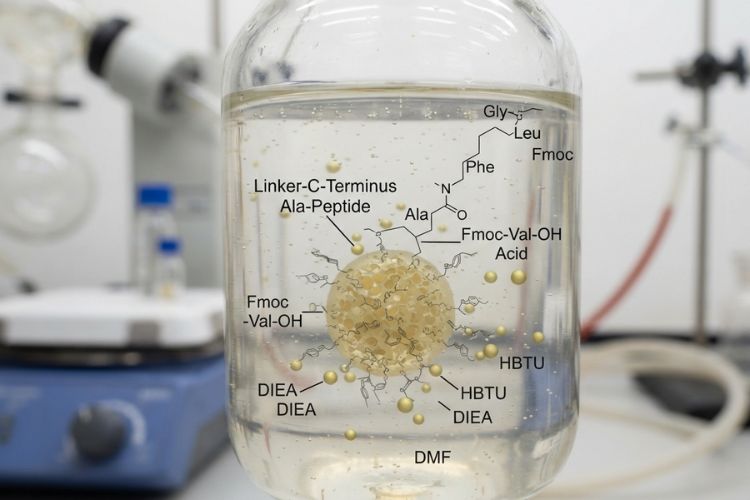
In SPPS, the first amino acid is attached to an insoluble material called a resin. The remaining amino acids are then added one at a time, with the peptide generally growing from its C-terminus toward its N-terminus. This step-by-step peptide chain assembly is one of the main ideas behind the method.
Keeping the peptide attached to a solid support makes repeated reactions easier to manage. Excess reagents and soluble by-products can be washed away while the growing peptide stays in place. This cycle can then be repeated until the planned sequence has been built.
The Resin Does More Than Hold the Peptide
The resin acts as the physical support throughout synthesis. A linker connects the first amino acid to the resin, creating a starting point from which the rest of the sequence can be built. Suitable resins also swell in certain solvents, allowing reagents to reach the growing peptide.
Resin and linker selection can influence how synthesis is carried out and how the completed peptide is eventually released. The choice may depend on the desired C-terminal group, the protecting-group strategy, and other features of the target sequence.
Why Amino Acids Need Protecting Groups
Amino acids have multiple groups that may react under synthesis conditions. If all of them were left available at once, reactions could occur at the wrong sites. Protecting groups temporarily block selected reactive groups so the intended peptide bond can form.
Fmoc and Boc are two established approaches used to protect the alpha-amino group during SPPS. Side chains may also require protection. These groups are chosen so they can later be removed under planned conditions without disrupting the peptide that has already been assembled.
How the SPPS Process Works From Start to Finish
SPPS follows a repeating series of reactions that gradually builds the peptide while it remains attached to the resin. Each cycle prepares the growing chain for another amino acid, continues the sequence, and removes material that is no longer needed.
Build the Peptide Through Repeated Cycles
A typical cycle begins by removing the temporary protecting group from the amino end of the resin-bound peptide. This exposes the group needed for the next reaction. The resin is then washed to remove the deprotection reagent and soluble by-products.
Next, another protected amino acid is activated and added. It reacts with the exposed amino group to form a new peptide bond. Another washing step removes excess material before the same cycle starts again.
Repeating these steps drives peptide chain assembly one residue at a time. Each cycle needs to work efficiently because incomplete reactions can become more difficult to manage as the peptide sequence gets longer.
Choose Between Fmoc and Boc Chemistry
The protecting-group strategy affects how deprotection is handled during SPPS. Fmoc uses a base-labile protecting group on the alpha-amino group. Once Fmoc is removed, the next protected amino acid can be coupled to the growing peptide.
Boc follows a different approach because it is removed under acidic conditions. Both strategies support step-by-step peptide synthesis, but they use different deprotection and final cleavage conditions. Fmoc chemistry is widely used in modern solid-phase peptide synthesis.
Release the Completed Peptide From the Resin
Adding the final amino acid does not complete the entire process. The finished peptide still has to be released from the solid support. Final cleavage breaks the bond between the peptide and resin, while side-chain protecting groups may also be removed during this stage.
The material obtained after cleavage is a crude peptide rather than a purified final product. It may contain truncated or deletion sequences, modified material, residual reagents, and other by-products. Suitable peptide purification methods are then needed to separate the target peptide from unwanted material.
Purification Separates the Target From Unwanted Material
There is no single cleanup approach that works equally well for every peptide. Different peptide purification techniques take advantage of properties such as hydrophobicity, charge, or molecular size. Common options include reversed-phase HPLC, ion-exchange chromatography, and size-exclusion chromatography.
Choosing between peptide purification methods depends on the sequence, impurities, required purity, scale, and physical properties of the material. In synthetic peptide purification, the aim is not simply to remove visible contaminants. Closely related peptide sequences may also need to be separated from the intended product.
For researchers working with dried and solution-based material, understanding Lyophilized vs. Liquid Peptides can also help clarify how the final physical form differs from the purification stage itself. Lyophilization is generally performed after suitable processing rather than acting as a substitute for purification.
Why Reversed-Phase HPLC Is Used So Often
Among available peptide separation methods, reversed-phase high-performance liquid chromatography is widely used for synthetic peptides. It separates compounds largely according to differences in hydrophobic interactions with the stationary phase while the mobile-phase composition changes during the run.
When working with reverse-phase chromatography peptides, differences that appear small can still affect retention. This makes RP-HPLC useful for separating the target from certain synthesis-related impurities. It can be used at preparative scale for purification and analytically to assess the purity of collected material.
These characteristics explain why RP-HPLC appears frequently when discussing peptide purification methods. However, the most suitable conditions still depend on the sequence and sample rather than one standard chromatographic setup working for every peptide.
Purity and Identity Need to Be Checked Separately
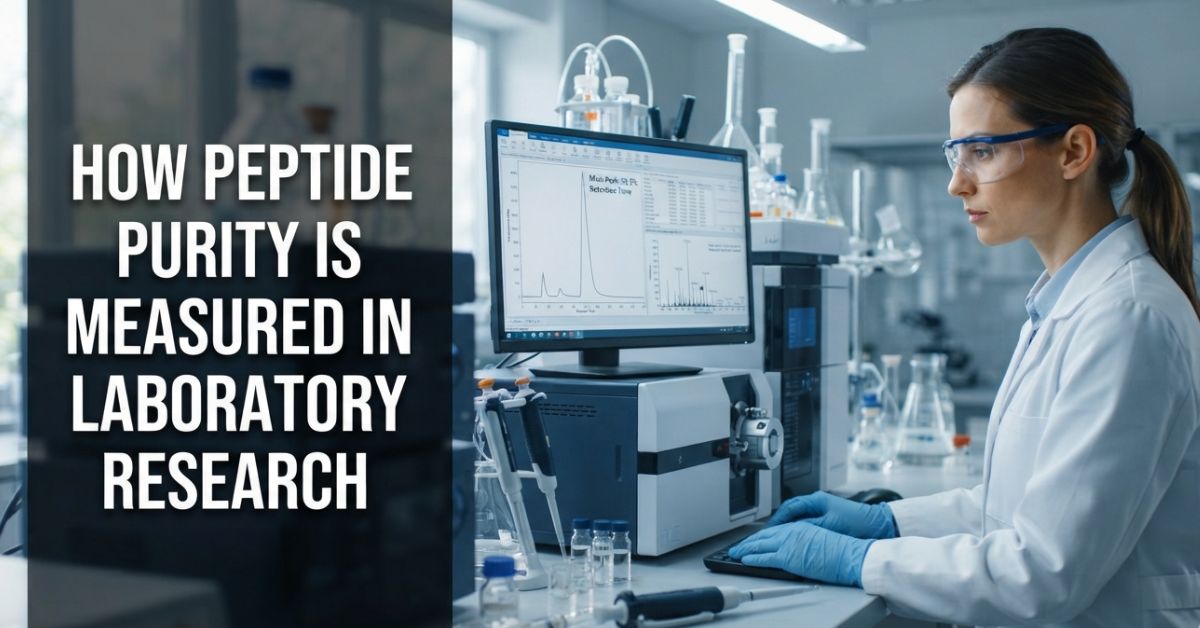
A purified fraction still needs analytical testing. RP-HPLC can help assess purity by showing the relative chromatographic profile of the sample, while mass spectrometry can provide information about molecular mass and help confirm whether the expected peptide is present.
These tests answer different questions, which is why they are often used together. Effective peptide purification methods therefore sit within a wider process that includes synthesis, purification, and quality control rather than being treated as the final check by themselves.
After purification and analysis, a peptide may be lyophilized to remove solvent and produce a dry material. Lyophilized peptides can then be handled or stored according to the requirements of the specific sequence and intended research use.
SPPS Can Be Manual or Automated
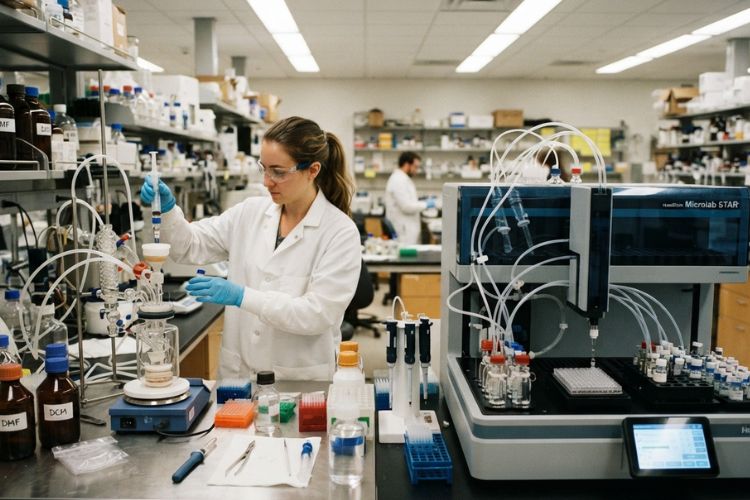
The core chemistry of SPPS can be carried out manually or with an automated peptide synthesizer. Automated systems handle repeated reagent delivery, deprotection, coupling, draining, and washing steps, which is useful when many cycles are required.
Automation does not remove every synthesis challenge. Difficult sequences can still experience aggregation, incomplete reactions, or side products. The crude material may therefore still require suitable peptide purification methods, even when the synthesis itself has been highly automated.
SPPS and Solution-Phase Synthesis Are Not the Same
The main distinction is where the growing peptide is located during synthesis. In SPPS, it remains attached to an insoluble support. In solution-phase synthesis, the reacting molecules remain in solution, so isolation and cleanup between stages are handled differently.
Keeping the growing chain immobilized is one reason SPPS works well for repeated amino acid additions. Still, the appropriate synthesis method depends on the target peptide, production scale, sequence complexity, and the goals of the work being performed.
Conclusion
SPPS provides a practical way to build peptides through repeated cycles while keeping the growing sequence attached to a solid support. Resin selection, protecting groups, coupling efficiency, cleavage, purification, and analytical testing all contribute to the final result.
Purification is therefore not separate from the bigger picture. Selecting suitable peptide purification methods and understanding reverse-phase chromatography peptides can help researchers evaluate what happens after synthesis and before a peptide is prepared for its intended research application. Black Pearl Labs supports research-focused peptide work where careful handling, quality, and consistency matter.
FAQs
What does SPPS stand for?
SPPS stands for solid-phase peptide synthesis. It is a chemical synthesis method in which a growing peptide remains attached to a solid resin while protected amino acids are added sequentially.
In which direction does a peptide grow during SPPS?
Standard SPPS generally assembles a peptide from the C-terminus toward the N-terminus. The C-terminal amino acid is attached to the resin first, followed by successive amino acid additions.
Does SPPS produce a pure peptide immediately?
No. Cleavage produces crude material that can contain the desired peptide along with truncated sequences, modified products, and other impurities. Appropriate peptide purification techniques and analytical testing are used afterward.
What is commonly used to purify synthetic peptides?
RP-HPLC is widely used because it can separate peptides according to differences in hydrophobicity. Other approaches may also be appropriate depending on the properties of the peptide and its impurities.