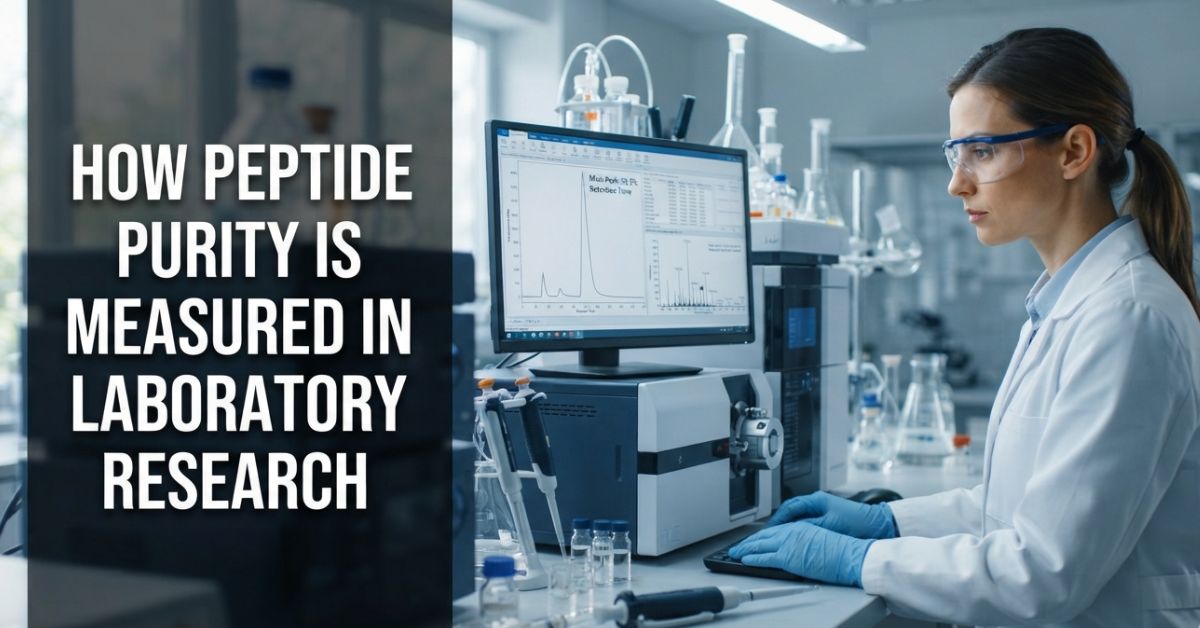
A label showing “99% pure” can seem pretty clear at first. You might read it and assume that 99% of everything in the vial is the peptide you are looking for. But in laboratory testing, that number tells a more specific story.
Researchers use analytical tools to see what is actually present in a sample and how its components compare. So, understanding peptide purity is not just about reading the percentage. It also means knowing where that number came from, how the sample was tested, and what the results can actually tell you.
What Does a Purity Number Actually Represent?
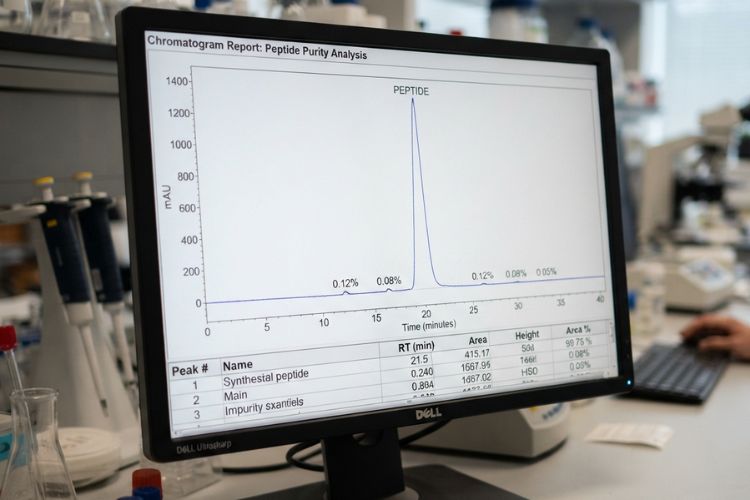
A purity result usually describes the proportion of the main detected component relative to other components seen under a particular analytical method. If one component produces almost all of the relevant detected signal, the reported percentage may be very high.
This does not automatically describe everything present in the vial. Research peptide purity is one characteristic of a sample, while molecular identity and total peptide content answer different questions.
Where Do the Extra Peaks Come From?
Peptide synthesis involves multiple chemical reactions. Even under controlled conditions, small amounts of other compounds may remain after production and purification.
These can include shorter peptide sequences, synthesis-related byproducts, chemically modified molecules, or degradation products. During peptide purity testing, these additional components may appear separately from the main peptide if the analytical method can resolve them.
Their presence does not tell researchers everything about their identity, but it does provide a reason to look more closely at the chromatographic profile.
How Does a Laboratory Turn a Sample Into a Purity Percentage?
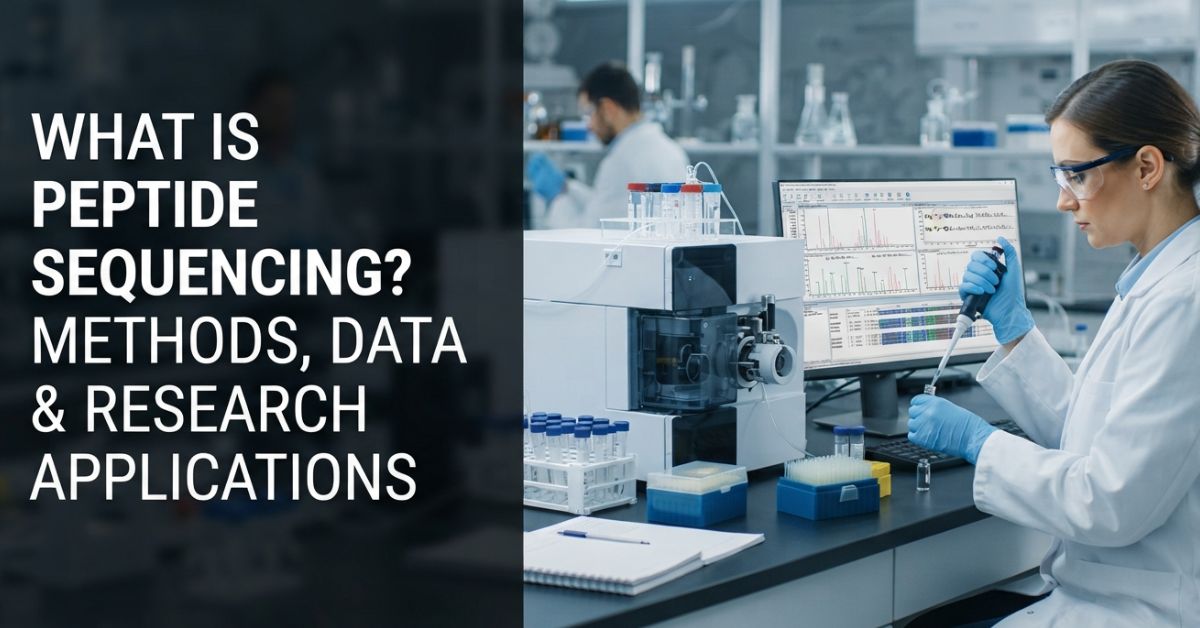
The number shown on a report is produced through several stages. High-performance liquid chromatography, commonly called HPLC, is widely used because it can separate different components within a peptide sample.
The Sample First Has to Be Prepared
Before analysis, a small amount of material is prepared at an appropriate concentration using a suitable solvent. The exact conditions depend on the analytical method.
Good preparation matters because peptide analysis starts with a sample that the instrument can measure consistently.
HPLC Separates the Mixture
Once injected, the sample moves through an HPLC column with a flowing mobile phase. Different compounds interact differently with the system, causing them to leave the column at different times.
This separation makes it possible to distinguish a dominant component from other detectable material. The resulting HPLC purity measurement depends on how clearly those components are resolved.
The Detector Creates a Chromatogram
As compounds leave the column, the detector records a signal. The final chromatogram displays those signals as peaks.
A large peak usually represents the dominant detected component, while smaller peaks show that other components were also detected. The time at which a peak appears is known as its retention time.
Peak Areas Become the Purity Percentage
The area beneath each relevant peak can be integrated by the analytical software. The main peak area is then compared with the total relevant integrated peak area.
If the dominant component accounts for approximately 99% of that detected signal, the reported peptide purity may be around 99%. This is why an HPLC purity result should always be understood in relation to the method used to generate it.
What Can You Learn From the Chromatogram?
A chromatogram gives researchers more information than the percentage printed on the report. The number and size of peaks provide a view of how the detected components are distributed.
A dominant peak with several small peaks looks different from a sample containing multiple substantial components. Retention times can also be compared under controlled method conditions.
Still, a chromatogram alone does not identify every peak. That requires additional analytical information.
A Large Main Peak Still Leaves One Question
Suppose HPLC shows one dominant component. Researchers still need to ask whether that component is consistent with the peptide they expected.
Mass spectrometry helps answer this by providing molecular mass information. In peptide analysis, HPLC and mass spectrometry therefore serve complementary purposes. HPLC separates and compares components, while MS can provide evidence supporting molecular identity.
This distinction is useful when evaluating overall peptide quality, because a high chromatographic result and confirmation of molecular identity are not the same measurement.
Why Two Labs May Not Report Exactly the Same Number
Analytical results are influenced by the conditions under which testing is performed. Column selection, mobile-phase gradient, detection wavelength, sample concentration, resolution, and peak-integration settings can all affect the chromatographic profile.
Two methods may therefore examine the same material somewhat differently. This is one reason research peptide purity results are more meaningful when the analytical method and supporting documentation are available.
99% Pure Does Not Mean 99% of the Vial Weight
This is one of the easiest purity results to misunderstand. A 99% chromatographic result generally refers to the relative detected peak area under the test conditions. It does not necessarily mean that 99% of the total powder weight is the target peptide.
Water, counterions, salts, and other material may contribute to the vial’s total mass without being represented in the chromatographic percentage in the same way.
In other words, peptide purity, peptide content, and molecular identity describe separate characteristics. Research Peptide Purity Explained can help provide further context when interpreting these different measurements.
What Should Be Behind a Purity Claim?
Instead of relying only on a percentage, researchers can look at the analytical evidence associated with the sample. A Certificate of Analysis may include:
- HPLC result and chromatogram
- Mass spectrometry data
- Expected and observed molecular mass
- Batch or lot identification
- Testing date
- Available method details
The type of compound also provides useful context when reviewing analytical information. For example, understanding What Is Melanotan Peptide? gives researchers background on the material before looking at testing data associated with a particular sample.
What Does Peptide Purity Testing Cost?
There is no universal peptide purity testing cost. Pricing depends on the laboratory, number of samples, analytical methods requested, turnaround time, and level of reporting required.
A basic HPLC run may cost less than a broader testing package that includes mass spectrometry or additional characterization. When comparing peptide purity testing costs, it is therefore important to check exactly what the laboratory includes in its service.
What Purity Testing Can and Cannot Tell You
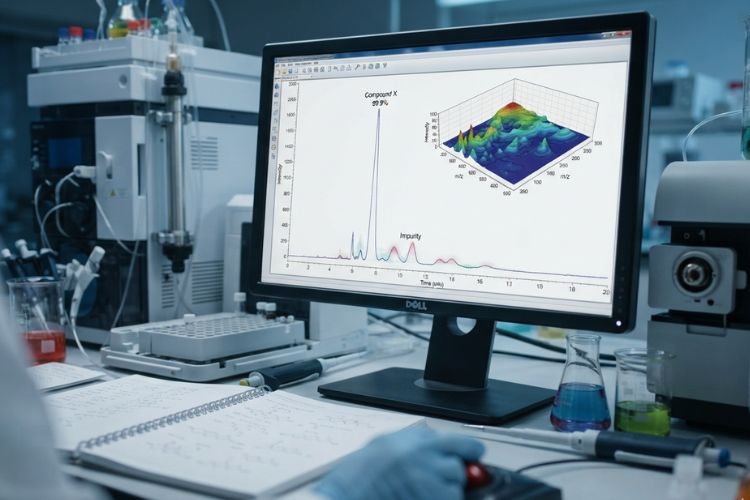
Peptide purity testing can provide valuable information about the relative composition of detectable components in a sample. It becomes more informative when combined with identity data and appropriate analytical documentation.
It cannot answer every question about a material on its own. Total content, molecular identity, sterility, and other characteristics require their own evidence. This is why peptide quality should not be judged from one percentage alone.
Researchers who shop peptides online can review available batch documentation and analytical results rather than relying solely on a purity claim displayed on a product page.
Final Thoughts
A reported peptide purity percentage is the end result of an analytical process, not simply a number assigned to a vial. HPLC separates and measures detectable components, while complementary methods such as mass spectrometry provide additional information about the material being examined.
Knowing where the number comes from makes it easier to understand what a purity report actually says and, equally important, what it does not.
FAQs
How is peptide purity calculated?
It is commonly estimated by comparing the integrated area of the main HPLC peak with the total relevant detected peak area.
What do smaller HPLC peaks represent?
They indicate other components detected during the analysis, although additional testing may be needed to determine exactly what those components are.
Can HPLC confirm peptide identity?
Not completely. HPLC can show how the different components in a sample separate, but it does not confirm identity on its own. Mass spectrometry can provide additional information about the molecule being tested.
Why are HPLC and mass spectrometry used together?
Each test tells researchers something different about the sample. HPLC helps show its purity profile, while mass spectrometry checks whether the molecular mass matches what is expected. Using both gives a clearer picture of the sample.