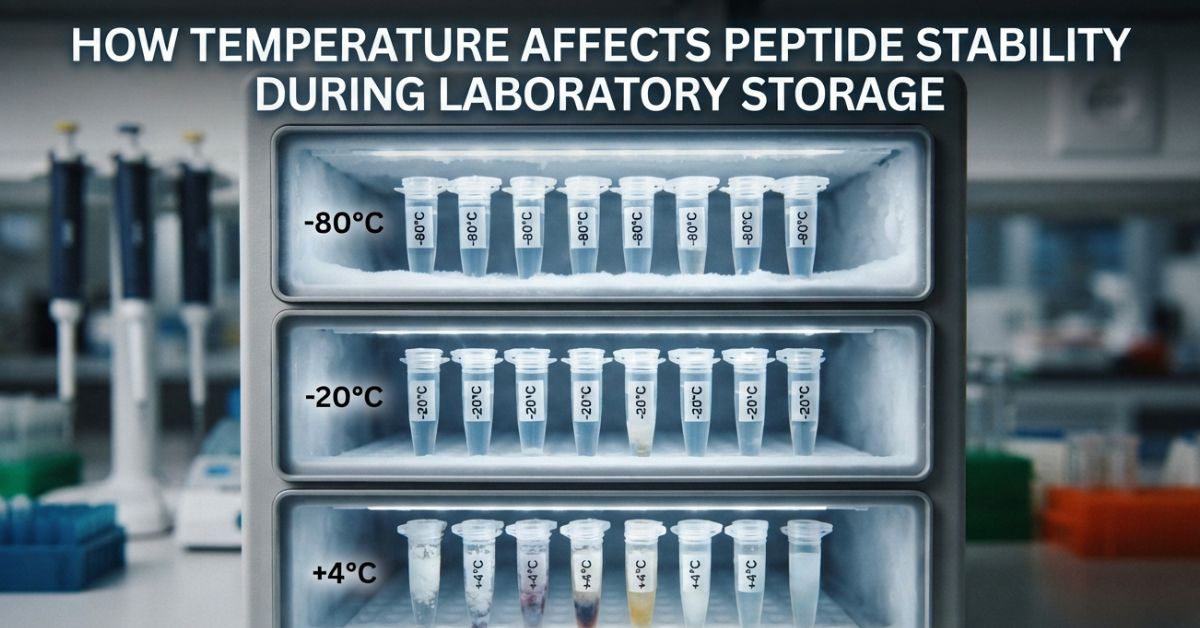
Temperature is one of the main environmental factors that can influence peptides while they are stored in a laboratory. Too much heat can speed up chemical changes, while colder conditions can slow many reactions. However, choosing a peptide storage temperature is not as simple as placing every compound in a refrigerator or freezer.
The appropriate conditions depend on the peptide, its physical form, formulation, and expected storage period. Understanding these differences helps laboratories protect research peptide stability and reduce storage-related changes that could affect later experiments.
Why Temperature Matters in Peptide Storage?
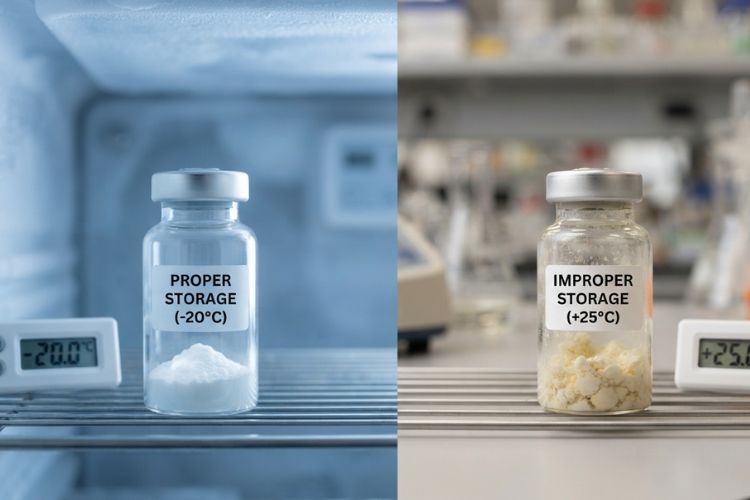
Storage conditions can have a direct effect on how well a peptide holds up over time. Heat tends to speed up chemical activity, while colder conditions generally slow it down. This is one reason laboratories carefully control the environment in which peptide samples are kept.
The response is not identical across all peptides. Their structure, formulation, moisture level, and physical form can change how they behave during storage.
The Link Between Temperature and Degradation
When a sample is exposed to excess heat, reactions such as oxidation, hydrolysis, and deamidation may happen more quickly. Over time, these processes can change the original composition of the material.
That makes it important to follow the recommended peptide storage temperature instead of applying the same conditions to every sample.
Why Stability Varies Between Peptides
Amino acid sequence and formulation play a role in how sensitive a peptide is to its surroundings. Some compounds may tolerate certain conditions better, while others require tighter control.
Looking at each compound separately gives researchers a clearer picture of what they are working with. For instance, What is Melanotan Peptide? offers additional background on melanotan and its research characteristics.
Peptide Stability at Different Storage Temperatures
The environment in which a peptide is kept can shape how well it retains its original properties. Room conditions, refrigeration, and freezing each offer a different level of control, so the choice should reflect the material’s documented requirements.
Room Temperature
Keeping a peptide at room temperature may be acceptable in certain laboratory situations, particularly during routine handling. However, leaving it out beyond the recommended window can make the sample more vulnerable to gradual deterioration. For this reason, room-temperature handling should follow the guidance available for the material rather than being used as a default storage method.
Refrigerated Conditions
Refrigeration can slow many reactions associated with degradation. When refrigerated conditions are specified for a particular compound, maintaining a consistent range can support research peptide storage and reduce unnecessary environmental variation.
Laboratory refrigerators should also maintain stable conditions because repeated changes can make storage less predictable.
Frozen Storage
Frozen conditions may be recommended for certain peptides, particularly when longer storage periods are involved. Lower temperatures can substantially slow many chemical reactions.
Freezing does not make a sample permanently stable, however. The correct peptide storage temperature still depends on the compound, formulation, packaging, and expected storage period.
What Happens When Peptides Get Too Warm?
Higher temperatures can speed up chemical reactions and affect peptide stability. Even when a sample looks unchanged, changes may still occur at the molecular level.
- Faster degradation: Heat may accelerate oxidation, hydrolysis, and other forms of peptide degradation.
- Structural changes: Higher temperatures may alter peptide structure or encourage aggregation.
The effect depends on the peptide, temperature, and length of exposure.
Lyophilized vs. Reconstituted Peptides
The physical form of a peptide can significantly change how it responds to storage conditions. A dry, lyophilized material does not necessarily have the same stability profile as the same compound in solution.
Temperature Stability in Dry Form
Lyophilization removes much of the water from a peptide preparation. Because water participates in several degradation pathways, removing it can improve stability for many compounds.
Still, lyophilized peptide storage requires controlled conditions. Temperature, residual moisture, packaging, and storage duration can all influence the material over time.
Stability After Reconstitution
Once a peptide is placed in solution, water, pH, concentration, and solvent composition become additional factors. Temperature can then have a different influence than it does in the dry state.
Guidance for lyophilized peptide storage should therefore not automatically be applied to a reconstituted sample. Researchers should follow information specific to the peptide and its prepared form.
The Problem With Temperature Fluctuations
A suitable average temperature does not necessarily mean storage conditions are stable. Repeated movement between cold and warmer environments exposes samples to changing conditions and may also create condensation.
This is particularly relevant to peptide temperature stability when samples are frequently removed from controlled storage and returned later.
Repeated Warming and Cooling
Regular temperature changes can make storage conditions harder to control and document. Keeping samples in a stable environment helps reduce this unnecessary variable.
Researchers interested in individual peptide requirements may also need regulatory and compound-specific background. Is Semax peptide FDA approved? Discusses this distinction for Semax without treating research use and approved medical use as the same thing.
Freeze-Thaw Cycles
Repeated freezing and thawing can affect some peptide solutions. Changes in ice formation, local concentration, and molecular interactions may contribute to aggregation or other physical changes.
The significance varies by formulation, so research peptide stability data and established laboratory protocols should guide how frozen samples are handled.
Short-Term Exposure vs. Long-Term Storage
Temperature and time work together. A brief temperature excursion and several days of exposure to the same temperature should not automatically be treated as equivalent.
Brief Changes in Temperature
A short change in storage conditions does not necessarily have the same impact on every peptide. What happens to the sample depends on its properties, the extent of the temperature variation, and the time involved. Researchers can review relevant stability records to understand how the material may have been affected.
Extended Storage Outside Recommended Conditions
Longer exposure gives chemical reactions more time to occur. Maintaining the specified peptide storage temperature becomes increasingly important when samples are intended to remain stored for extended periods.
Keeping Storage Temperatures Consistent
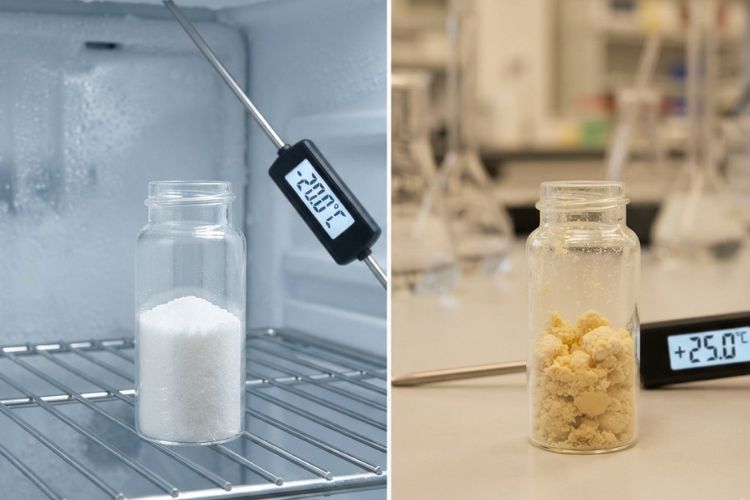
Reliable research peptide storage depends on maintaining the conditions specified for the individual compound. Consistent temperatures also make it easier to document storage history and identify unexpected temperature changes.
Labs should follow the handling guidance provided for each peptide rather than relying on one routine for every sample. Regular checks of refrigeration or freezing equipment help keep conditions steady, while proper labeling makes samples easier to identify without taking them out unnecessarily.
Researchers sourcing materials for laboratory studies can shop peptides online while reviewing the available product information for individual research compounds.
Conclusion
Good storage is ultimately about keeping research samples as close to their intended condition as possible. Heat, prolonged storage, and frequent movement between different environments can all make that harder to achieve.
Instead of treating every peptide alike, laboratories should work from the information available for each material. Paying attention to its form, recommended peptide storage temperature, and handling history can help preserve sample quality and support more dependable research results.
FAQs
What temperature should research peptides be stored at?
It depends on the specific peptide. Some are kept chilled, while others need frozen conditions. The product’s storage guidance is the best reference.
Can room temperature affect peptide stability?
It can. Leaving a sample in a warm environment for too long may encourage chemical changes that affect its quality.
Are lyophilized peptides more stable during storage?
In many cases, they are. Freeze-drying removes most of the water, which can help limit certain reactions during storage.
What happens if a peptide gets too warm?
Excess heat can make certain reactions happen faster, potentially changing the sample over time.
Do freeze-thaw cycles matter for peptide samples?
Repeated thawing and refreezing can place stress on some peptide solutions and may lead to unwanted changes.