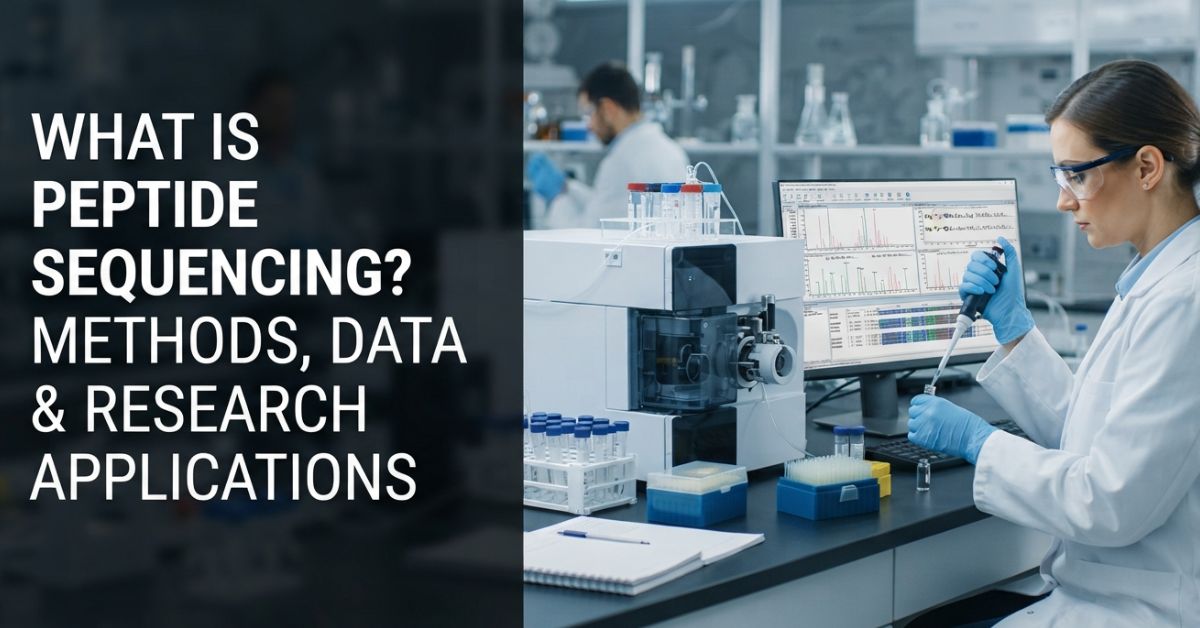
Creating a peptide in the laboratory involves joining amino acids in a precise sequence. Doing this efficiently becomes more difficult as the chain grows because researchers also need to separate the developing peptide from unused reagents and reaction byproducts. Solid-phase peptide synthesis offers a practical way to manage this process.
The method keeps the growing peptide attached to a solid material while amino acids are added one at a time. This approach has become an important part of modern peptide chemistry and is widely used to prepare synthetic peptides for laboratory research.
What Is Solid-Phase Peptide Synthesis?
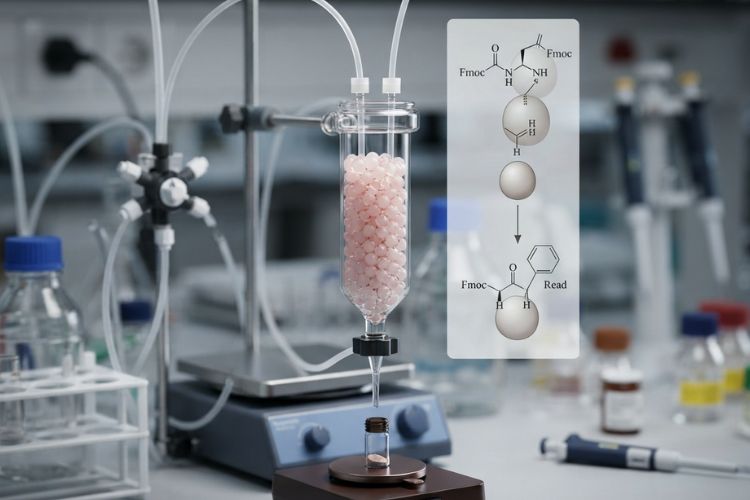
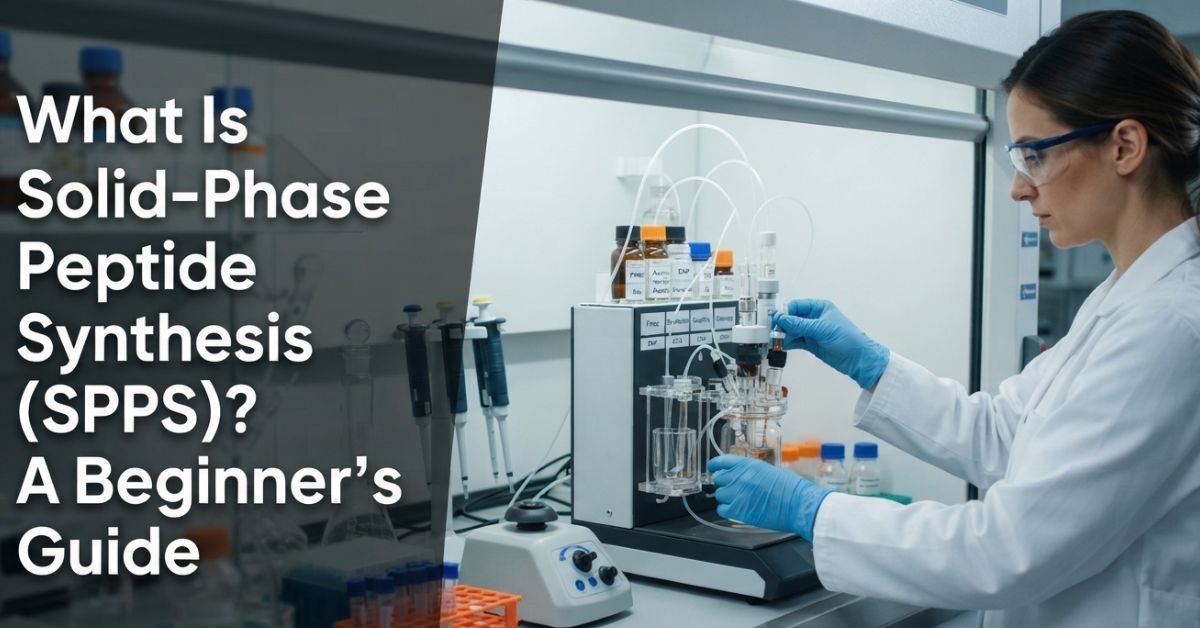
Solid-phase peptide synthesis is a technique in which a peptide is assembled while anchored to an insoluble support called a resin. The process starts with one amino acid, followed by the controlled addition of further amino acids until the intended sequence has been created.
The technique was introduced by chemist R. Bruce Merrifield in the 1960s. Keeping the growing chain attached to resin made peptide synthesis easier to manage because excess reagents could be washed away without repeatedly isolating the developing peptide.
What Is Needed for SPPS?
Several components work together during SPPS. Each has a specific role in controlling how the amino acid chain develops.
- Resin: Provides the solid surface that holds the growing peptide throughout synthesis.
- Protected amino acids: Prevent unwanted reactions while allowing amino acids to be added in a planned order.
- Coupling reagents: Help create a peptide bond between the growing chain and the next amino acid.
- Solvents: Carry reagents through the resin and help remove material left after each reaction.
Together, these components provide the controlled environment needed for reliable peptide chemistry.
How Does Solid-Phase Peptide Synthesis Work?
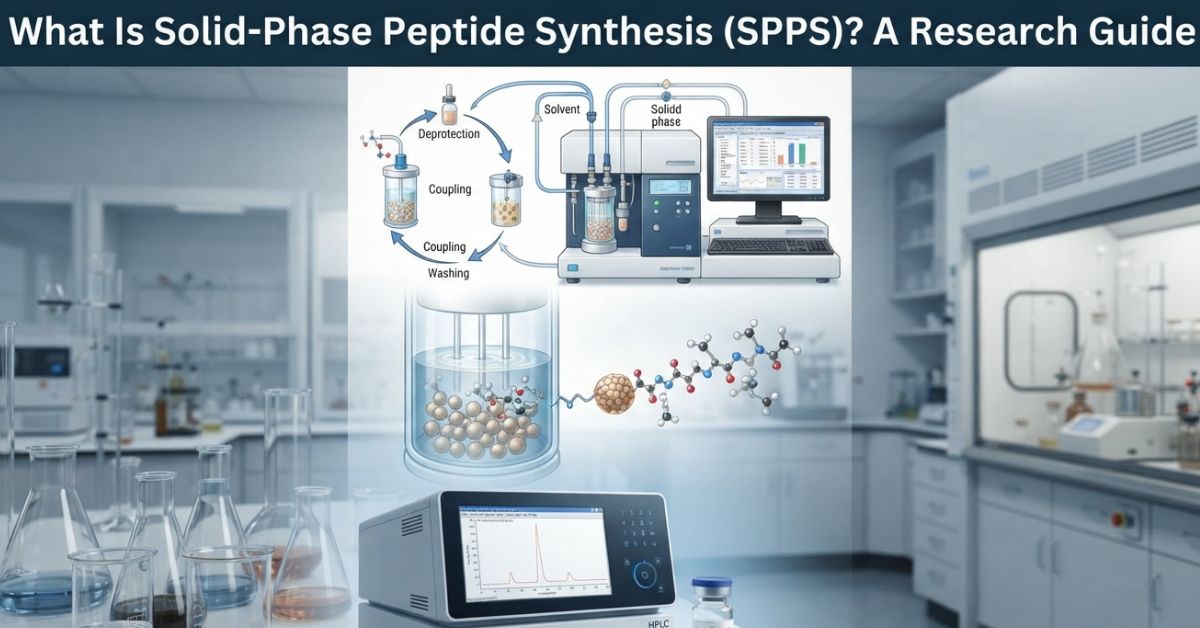
The process is based on a repeating cycle. The peptide normally grows from its C-terminus toward its N-terminus, with one amino acid added during each round.
- Attach the starting amino acid: The first amino acid is linked to the resin.
- Remove temporary protection: A protecting group is taken away to expose the reactive site.
- Add the next amino acid: Coupling chemistry joins the new amino acid to the chain.
- Wash the resin: Unreacted material and soluble byproducts are removed.
- Repeat the process: The same sequence continues until the planned chain is complete.
This repeating design is one of the defining features of solid-phase peptide synthesis. Because the chain remains anchored throughout the process, researchers can move from one reaction to the next without isolating it after every step.
Why Are Protecting Groups Necessary?
Amino acids contain several chemically active areas. If all of these sites were available during synthesis, unwanted reactions could occur and interfere with the intended sequence. Protecting groups temporarily block selected sites until they are required.
Two well-known approaches are Fmoc and Boc chemistry. Fmoc is generally removed under basic conditions, whereas Boc is acid-labile. Side-chain protection may also be used to keep other reactive groups unavailable while the main peptide chain develops.
These strategies give researchers greater control over peptide synthesis and reduce the chance of reactions taking place at the wrong location.
From the Resin to a Crude Peptide
Once all amino acids have been added, the chain still remains attached to the resin. It must be released through a cleavage step. Depending on the chemistry involved, this stage can also remove protective groups that remain on amino acid side chains.
The material collected after cleavage is generally considered crude rather than finished. It may contain the intended sequence alongside incomplete chains and other synthesis-related impurities. This is why producing synthetic peptides involves more than simply completing the amino acid sequence.
The same attention to detail is important when researching individual peptides. Questions such as ” Is Semax Peptide FDA approved? show why a compound’s synthesis, research background, and regulatory standing need to be considered separately.
What Happens After Synthesis?
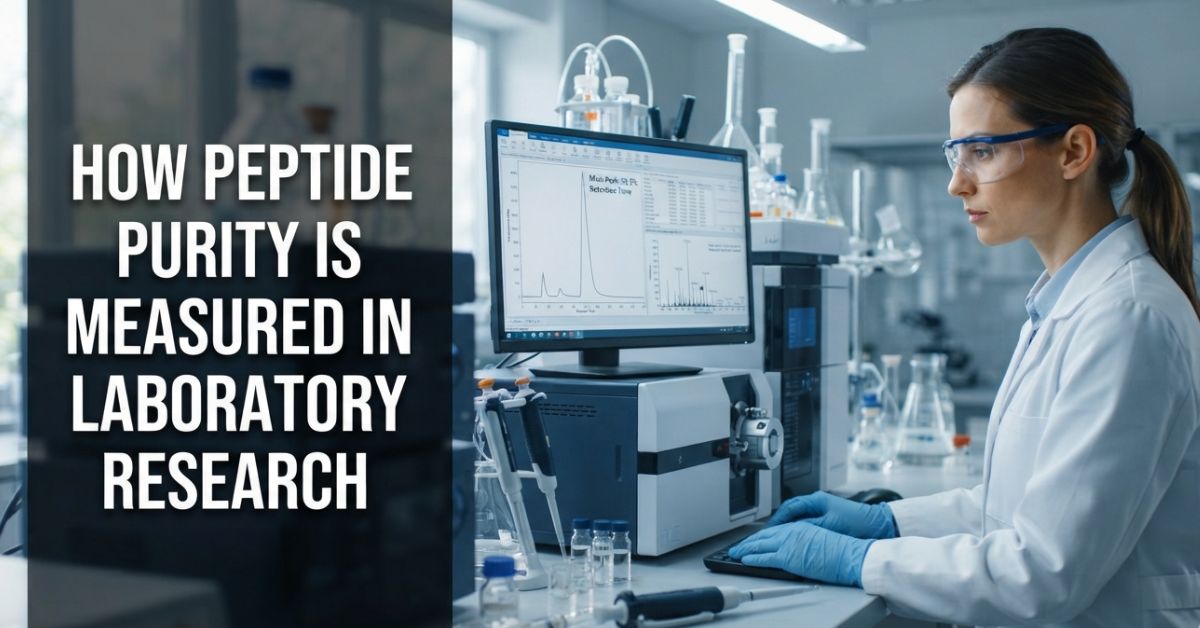
After cleavage, purification is used to separate the desired material from unwanted components. High-performance liquid chromatography (HPLC) is commonly used for this purpose, while analytical techniques such as mass spectrometry can help confirm molecular identity.
The purified material may then undergo additional processing depending on its intended laboratory format. In some cases, water is removed to create a dry product. What are Lyophilized Peptides? explains the process and why freeze-drying is used for certain research materials.
Purification and analysis are important because completing solid-phase peptide synthesis does not by itself confirm that the collected material contains only the intended sequence.
Where Can Problems Occur During SPPS?
SPPS is a controlled method, but each stage still leaves room for error. Even a minor setback can carry forward and influence the final product.
Common challenges include:
- Incomplete coupling: A new residue may fail to connect at every available site.
- Incomplete deprotection: Protective groups may not be fully removed before the next step begins.
- Deletion sequences: Some resulting peptides may lack one or more residues from the intended sequence.
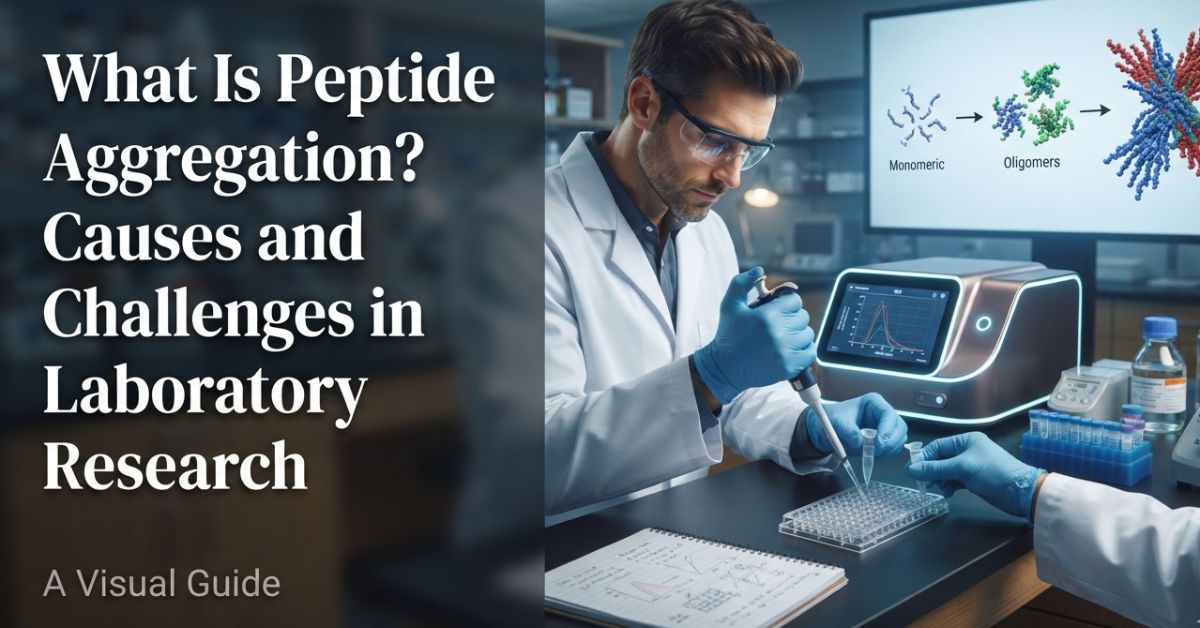
- Aggregation: Developing peptides may cluster together, making certain reactive areas less accessible.
These issues are often harder to manage as sequences become longer or more complex. Purification and analytical testing can then help separate and identify the desired product.
Manual vs. Automated SPPS
Because SPPS follows a series of recurring steps, much of the process can be handled by specialized synthesizers. These systems manage tasks such as adding reagents, rinsing the resin, removing protecting groups, and forming new peptide bonds.
A hands-on approach gives researchers more flexibility to adjust individual stages when needed. Automated equipment, on the other hand, can streamline routine work and maintain a steady workflow across multiple cycles.
The chemistry behind both methods remains essentially the same; the main difference is how much of the process is carried out by the researcher or the instrument.
Why Is SPPS Widely Used in Peptide Research?
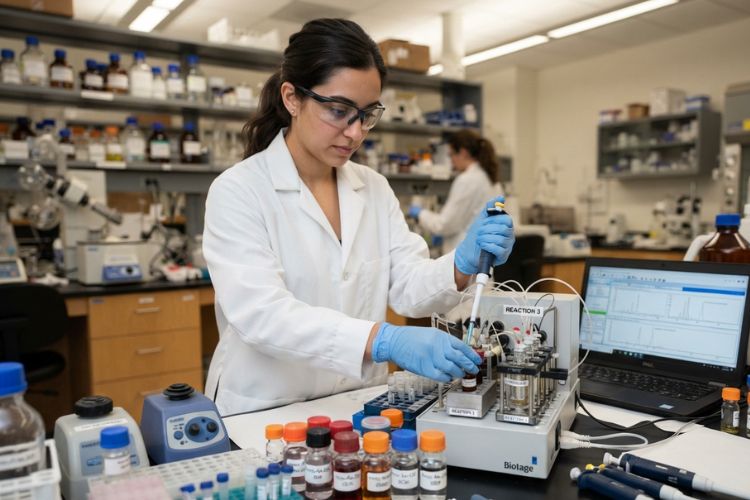
The major practical benefit of solid-phase peptide synthesis comes from keeping the developing chain attached to a fixed support. Researchers can remove excess material between reactions without having to recover the peptide after every amino acid addition.
The method also works well with automation and gives researchers control over the order in which amino acids are assembled. These characteristics have made it useful for producing many types of synthetic peptides for research.
Laboratories looking for prepared research materials can also explore Research Peptides for sale online and review information available for individual compounds.
Conclusion
The key idea behind solid-phase peptide synthesis is simple: build the amino acid chain while keeping it anchored to a resin. Repeated cycles of deprotection, coupling, and washing allow the sequence to grow in a controlled manner.
Once assembly is complete, the peptide is released, purified, and analyzed. This combination of controlled chain construction and compatibility with automated systems explains why the method remains an important tool in laboratory research.
FAQs
Why is resin used in solid-phase peptide synthesis?
Resin holds the developing peptide in place, allowing excess reagents and byproducts to be washed away between reactions.
What direction does a peptide grow during SPPS?
The chain is generally assembled from the C-terminus toward the N-terminus.
What is coupling in SPPS?
Coupling is the reaction that joins a new amino acid to the growing peptide chain by forming a peptide bond.
What happens after SPPS is complete?
The peptide is removed from the resin and typically goes through purification and analytical testing.
Can solid-phase peptide synthesis be automated?
Yes. Its repetitive reaction cycle makes the method well suited to automated peptide synthesizers.