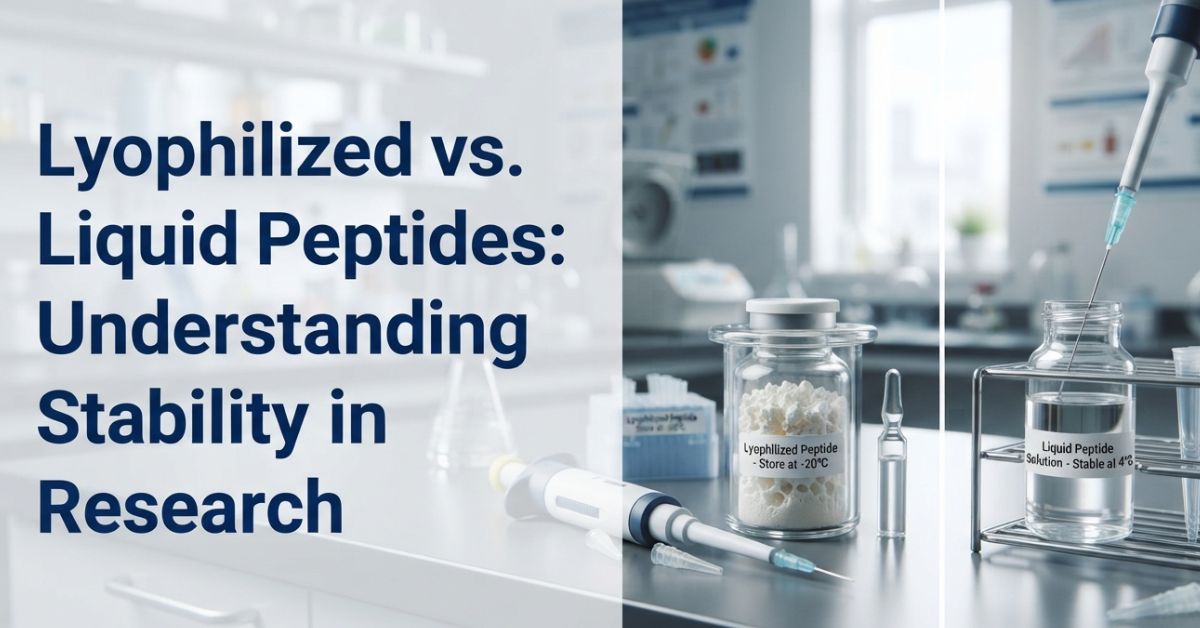
A peptide can exist as a dry material or as part of a prepared solution, and that difference is more important than it may first appear. Adding liquid does not simply change how the sample looks. It changes the environment surrounding the peptide molecules.
That is why the lyophilized vs. liquid peptides comparison matters in laboratory research. The presence of water, the formulation, and the physical state of the sample can all influence how it behaves over time. Understanding these differences helps researchers interpret stability information more accurately without assuming that every peptide follows the same pattern.
What Changes When a Peptide Goes From Dry to Liquid?
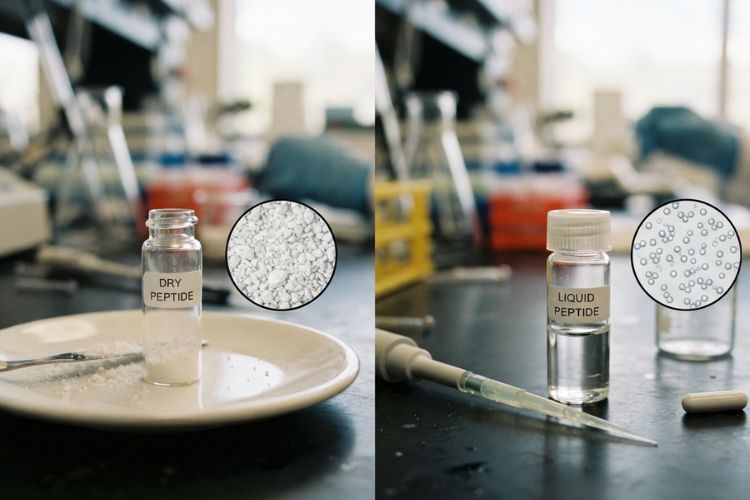
Lyophilization removes most of the water from a peptide preparation through a freeze-drying process. The resulting material is kept in a dry state until it is reconstituted for laboratory use.
Once a solvent is introduced, the situation changes. The peptide molecules can move more freely, interact with the surrounding solution, and participate in reactions that may be limited in a dry environment. This transition is one of the main reasons lyophilized v. liquid peptides can have different stability profiles.
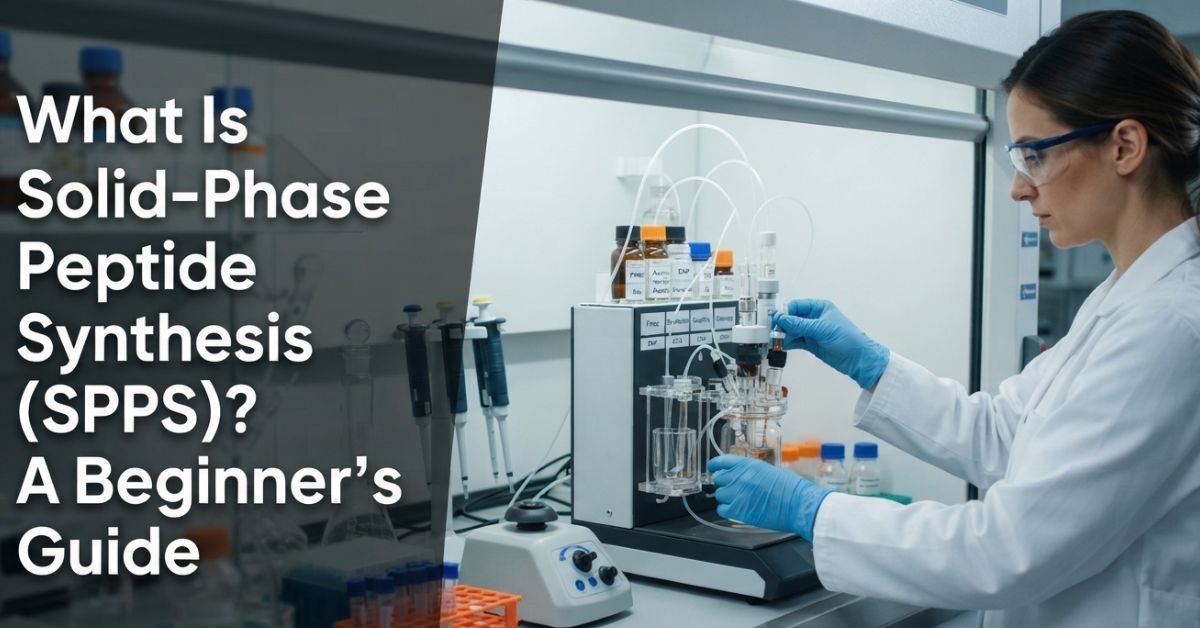
For a closer look at how freeze-dried material is produced and why it is used in research, what are Lyophilized Peptides? provides useful background on the process itself.
Where Does the Stability Difference Come From?
The biggest difference is not simply powder versus liquid. It is the molecular environment created by each form.
Water Changes the Chemical Environment
Water can participate in chemical reactions and gives molecules greater freedom to interact. Once a peptide enters an aqueous solution, certain reactions can become more relevant than they were in the dry state.
This helps explain why liquid peptide stability often needs to be considered separately from the stability of the same material before reconstitution.
Molecules Have More Freedom to Move
In a dry matrix, molecular movement is relatively restricted. In solution, molecules can move and interact more easily.
Those interactions can affect how a particular peptide behaves. The exact effect depends on its sequence, structure, concentration, and formulation, so the difference between lyophilized vs. liquid peptides should not be reduced to a single rule that applies to every compound.
Formulation Still Makes a Difference
Freeze-drying removes most of the water, but that does not mean the peptide will stay exactly the same over time. Other parts of the formulation can still influence how well the material holds up.
Small amounts of moisture left behind, exposure to oxygen, and the peptide’s own molecular properties can all make a difference. Because of this, lyophilized peptides may not behave the same way even when they are both kept in a dry form.
What Can Happen After a Peptide Is Reconstituted?
Reconstitution creates a new chemical environment. Depending on the molecule and formulation, being in solution can make processes such as hydrolysis, oxidation, or molecular association more relevant.
Concentration can also influence how molecules interact with one another. A highly concentrated solution may behave differently from a more dilute preparation, even when both contain the same peptide.
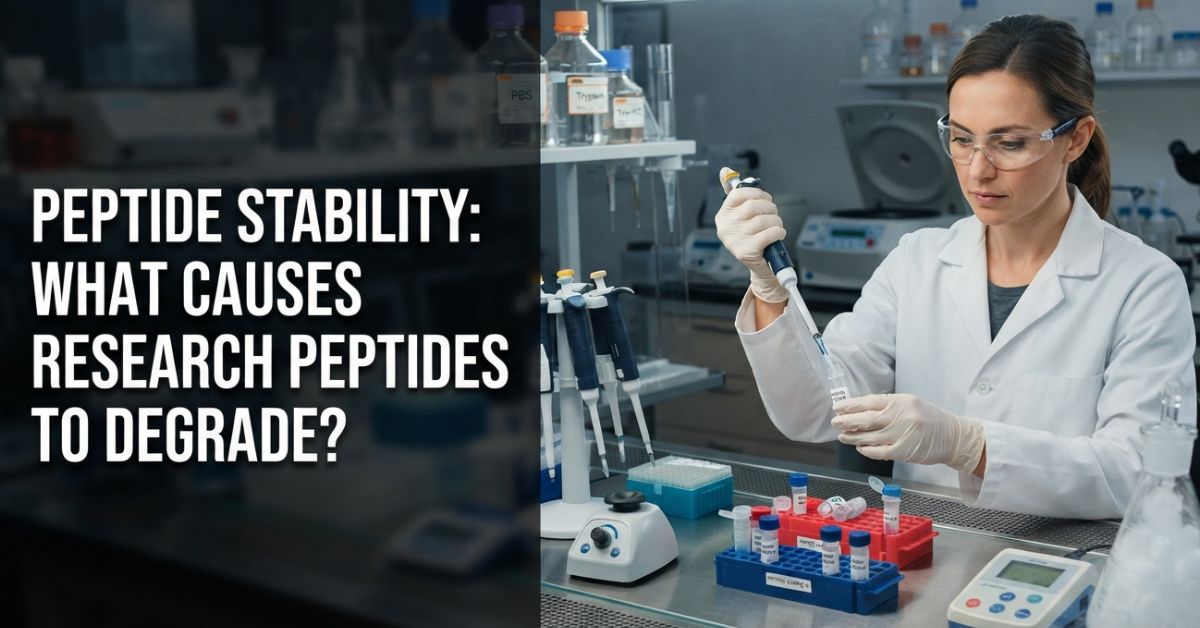
For this reason, liquid peptide stability is not determined simply by the fact that the material is liquid. The solvent, pH, concentration, temperature, and properties of the molecule all contribute to what happens after preparation.
Does Lyophilization Stop Changes Completely?
No. Freeze-drying can reduce the amount of water available in a sample, but it does not place the material in a completely inactive state.
Small amounts of residual moisture may remain, and the sample can still be influenced by its surrounding environment. Temperature and exposure conditions may also matter depending on the compound and formulation.
So, when discussing lyophilized vs liquid peptides, it is more accurate to think in terms of different stability environments rather than one form being permanently stable and the other being unstable.
What Happens During Reconstitution?
Adding a solvent creates new conditions around the peptide molecules. Instead of remaining within a dry material, they become surrounded by liquid and are able to move and interact more freely.
The type of solvent, pH, and concentration can influence how the prepared sample behaves. Because these conditions vary, peptide stability data for a dry sample should not automatically be applied to the same peptide once it has been reconstituted.
Why Do Freeze-Thaw Cycles Matter More for Solutions?
A prepared peptide sample may be taken out of frozen storage several times during a research project. Each time it freezes and thaws, the conditions inside the solution shift for a short period.
As ice forms, dissolved substances may become more concentrated in the liquid that has not yet frozen. Once the sample thaws, everything mixes again. Going through this cycle repeatedly can place extra stress on some formulations.
For this reason, the number of freeze-thaw cycles may be considered when planning peptide storage. How much they matter depends on the peptide and its formulation, so there is no single limit that applies to every sample.
Can Appearance Tell You Which Form Is More Stable?
Not reliably. A dry peptide may retain its expected appearance even if subtle molecular changes have occurred. In the same way, a liquid preparation can remain clear while its composition changes.
Appearance can reveal obvious physical problems, but it cannot establish peptide stability on its own. Stability comparisons are more meaningful when they are based on analytical observations collected under defined conditions.
How Do Researchers Compare Dry and Liquid Forms?
A useful stability comparison follows both forms over time rather than testing them only once. Researchers can examine samples at selected intervals and look for changes relative to their starting condition.
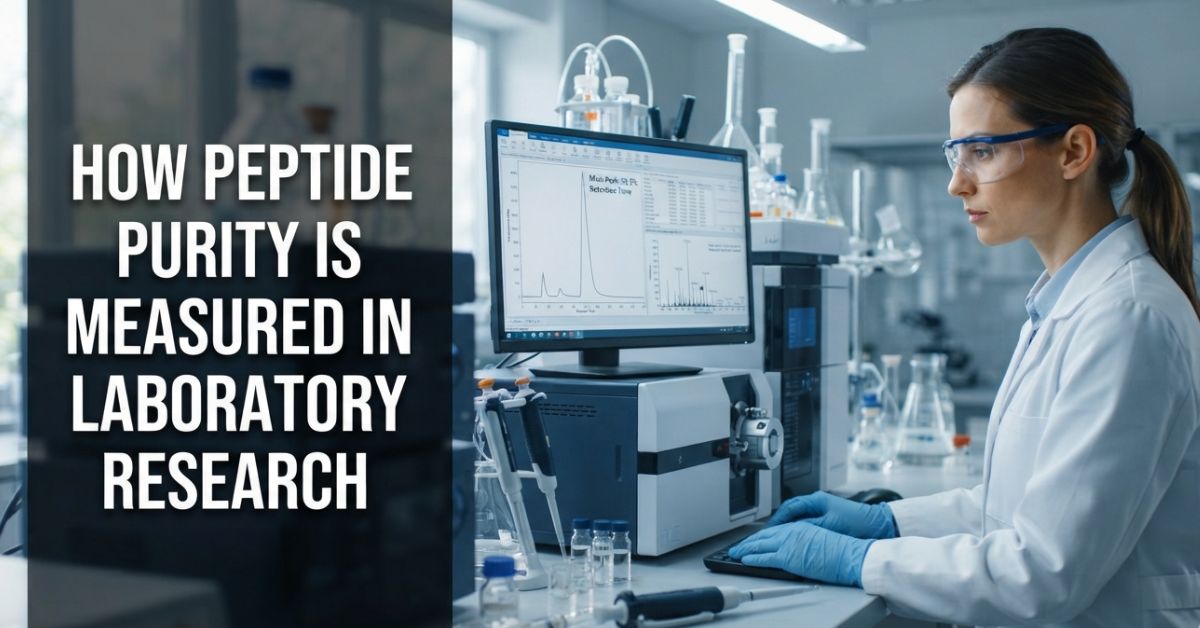
For example, a study may compare chromatographic profiles, molecular characteristics, or the appearance of additional components. The goal is not simply to declare one form “better,” but to understand how quickly and in what way each preparation changes under the conditions being studied.
This approach gives the lyophilized vs liquid peptides comparison practical meaning because both forms are evaluated within a defined experimental setting.
Why Is There No Universal Shelf Life?
Two peptides placed under identical conditions may not behave identically. Amino acid sequence, molecular structure, formulation, residual moisture, concentration, and surrounding conditions can all influence stability.
Even closely related research peptides may therefore require different considerations. A stability period reported for one compound should not automatically be applied to another.
The compound being studied also matters when interpreting stability information. Understanding What Is Melanotan Peptide?, for example, provides compound-specific context that a general discussion of physical form cannot provide.
What Should Researchers Look for in Stability Information?
Useful documentation should make it clear what was actually tested. A statement about stability has limited value if it does not identify whether the material was dry or already in solution.
Researchers can look for details such as:
- Whether testing involved dry or reconstituted material
- The conditions used during the study
- How long samples were observed
- The formulation or solvent involved
- Analytical methods used to track changes
- Whether results apply to a particular batch or formulation
These details provide more context when evaluating research peptides for sale than a general stability claim without supporting conditions.
Why Physical Form Matters in Research Planning
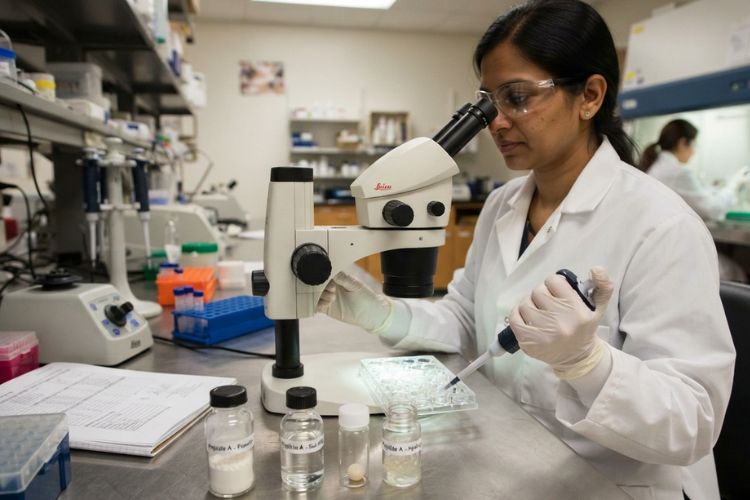
The choice between dry and prepared material can affect more than storage. It can influence when samples are prepared, how often they are handled, and how researchers organize repeated experiments.
For many research peptides, understanding the physical form helps laboratories plan workflows around the characteristics of the material rather than treating every sample in exactly the same way. Good peptide storage planning therefore starts with a simple question: what form is the peptide currently in?
Final Thoughts
The key difference between lyophilized vs liquid peptides lies in the environment surrounding the molecule. Freeze-drying removes most water and limits molecular movement, while reconstitution places the peptide into a solution where its interactions and stability conditions change.
Neither form has one universal stability period. The peptide, formulation, physical state, and research conditions all need to be considered together when interpreting stability information.
FAQs
Are lyophilized peptides more stable than liquid peptides?
They can have different stability profiles because removing most of the water limits certain reactions and molecular movement. The actual difference depends on the peptide and its formulation.
Why does adding liquid change a peptide?
Reconstitution changes the peptide from a dry matrix to a solution. This increases molecular mobility and creates a different chemical environment around the molecule.
Can lyophilized peptides still change over time?
Yes. Lyophilized peptides are not completely protected from change. Residual moisture, formulation, environmental conditions, and the peptide’s own characteristics can still play a role.
Does every peptide have the same stability after reconstitution?
No. Stability in solution varies according to the peptide sequence, formulation, concentration, pH, solvent, and surrounding conditions.