Skin color may look simple on the surface, but there is a lot happening underneath. Specialized cells called melanocytes produce melanin, the pigment that gives skin much of its color. Researchers have spent years studying this process to understand what controls melanin production and why pigmentation can vary from person to person.
Melanotan Research became part of this field because Melanotan compounds were developed as analogs of alpha-melanocyte-stimulating hormone, commonly called α-MSH, rather than looking at these compounds only as Tanning Peptides, research offers a closer look at what happens inside pigment-producing cells and why the response can vary between individuals.
Skin Pigmentation Begins Inside Melanocytes
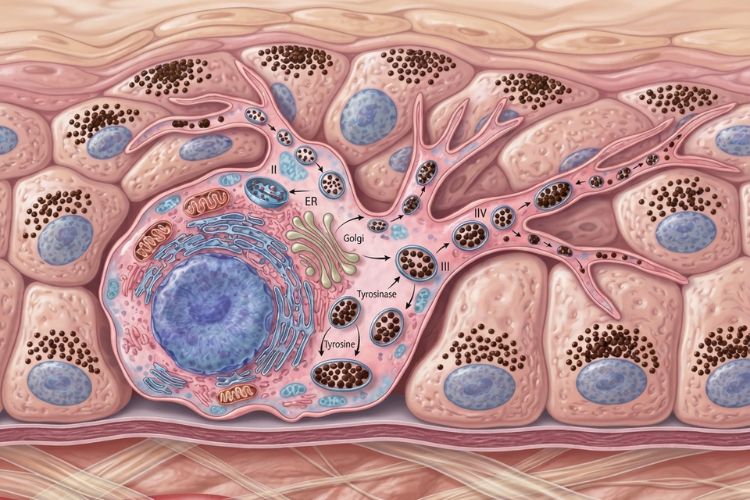
Skin gets much of its natural color from melanin, which is made by cells called melanocytes. These cells produce melanin inside tiny structures known as melanosomes. The pigment is then passed along to nearby skin cells, helping create the skin tone we see.
There are two main types of melanin. Eumelanin gives skin and hair brown to black tones, while pheomelanin is more closely linked with red and yellow tones. Everyone has a different mix, which is one reason skin color varies so much from person to person and matters for Skin Health.
Melanin levels can change too. Sun exposure, genetics, and activity within melanocytes can all affect how much pigment the skin produces. This is why researchers studying changes in pigmentation often look at what is happening inside these cells.
The α-MSH Signal Behind Changes in Pigment
One important part of pigmentation biology involves α-MSH and the melanocortin 1 receptor, or MC1R. MC1R is found on melanocytes. When α-MSH binds to this receptor, it activates signaling that can increase cAMP and tyrosinase activity, both of which are involved in melanogenesis.
This pathway is one reason Synthetic Peptides modeled after naturally occurring signaling molecules have attracted scientific attention. Instead of treating pigmentation as a surface-level change, researchers can study the cellular signals that influence how much melanin melanocytes produce and what type of pigment becomes more prominent.
Where Melanotan Fits Into the Pigmentation Pathway
Melanotan compounds were developed from α-MSH research. The melanotan peptide has therefore been studied in relation to melanocortin receptors and the biological steps involved in melanin production. This connection makes the compounds relevant to experiments examining human pigmentation and melanocyte activity.
Early Melanotan Research helped researchers examine whether activating this pathway could produce measurable changes in skin pigment. Studies of the α-MSH analog formerly called Melanotan I found changes in skin darkening and eumelanin levels, giving researchers measurable evidence beyond visual observations alone.
Human Studies Found Measurable Changes in Melanin
Human studies provide some of the most interesting findings in Melanotan Research. In one randomized controlled study involving 77 Caucasian participants, administration of NDP-MSH produced a significant increase in melanin density compared with placebo. Researchers also examined how different MC1R variants affected the response.
Another small human study examined Melanotan I in seven volunteers with Fitzpatrick skin types III or IV. Researchers reported increased eumelanin after treatment, including a mean increase of 98% in forearm skin compared with baseline. Pheomelanin did not show a significant change in that study.
These findings are useful when discussing possible Melanotan Benefits within a research context. They show that the observed pigmentation response was connected with measurable biological changes. They do not, however, establish that every Melanotan compound will produce identical results across different populations or conditions.
Melanotan I and II Raise Different Research Questions
Melanotan I and Melanotan II come from the same area of peptide research, but they are not the same compound. Melanotan I, now known as afamelanotide, is closely linked with MC1R activity. Melanotan II is a shorter, cyclic peptide that can interact with several melanocortin receptors rather than focusing as strongly on one.
This difference is worth keeping in mind when looking at Melanotan Benefits reported in research. A result seen with Melanotan I does not necessarily tell us what will happen with Melanotan II. The compound used, how the study was carried out, and who took part can all affect what researchers find.
The same approach matters when scientists work with research peptides in the lab. Instead of grouping everything under the Melanotan name, they need to look at the exact peptide being studied and how it behaves. This makes it easier to put individual study results into the right context without stretching them beyond what the research actually showed.
What Can Affect the Pigmentation Response
Several things can affect how skin pigmentation changes. A person’s genetics, natural skin tone, UV exposure, and the way certain receptors work can all play a part. Researchers keep these differences in mind when looking at results from Melanotan studies.
Genetics Can Shape the Response
Skin type is not the only thing that can affect pigmentation. Differences in the MC1R gene are often linked with traits such as fair skin and red hair. Researchers have also studied these genetic differences to see whether they change how the body responds to melanocortin analogs.
One controlled study found an increase in melanin density even among participants with several MC1R variants. Melanotan Research like this suggests that visible skin tone alone cannot explain every response. A person’s genetics and the way their receptors behave can also make a difference.
More Pigment Does Not Remove UV Risk
Melanin gives the skin some natural protection when it is exposed to UV rays, and eumelanin plays an important part in that response. But having more pigment does not mean the skin is safe from sun damage. UV rays can still affect and damage skin cells, even when the skin becomes darker.
This is important when looking at compounds often called Tanning Peptides. A change in pigmentation should not be treated as complete protection from the sun. Normal sun protection still matters regardless of how much visible pigment the skin develops.
Pigmented Lesions Have Also Drawn Attention
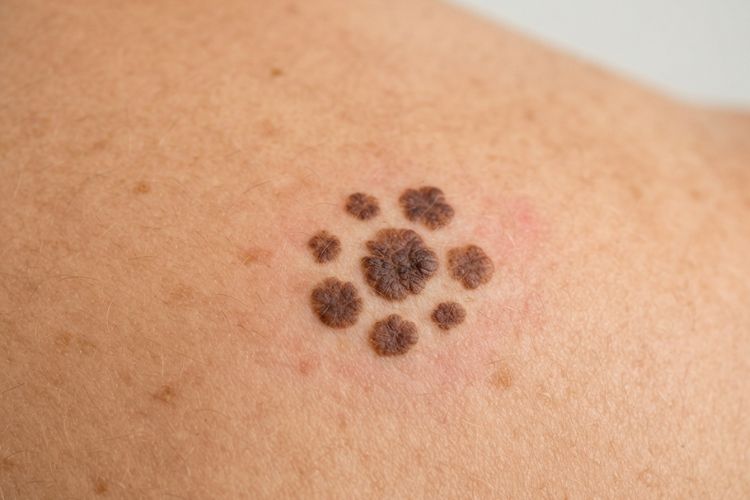
Researchers have also paid attention to reports of moles and other pigmented spots changing after Melanotan II use. Published case reports have described darker existing moles and new pigmented lesions. Some cases have also involved melanoma diagnoses, although other risk factors were often present.
These reports need to be read carefully. They do not prove that Melanotan directly caused the changes or diagnoses being reported. Current Melanotan Research still leaves questions about long-term effects on melanocytes, and a direct causal link with melanoma has not been established.
What the Evidence Can and Cannot Tell Researchers
Research has shown a connection between melanocortin signaling, MC1R activity, and the production of melanin. Human studies have also recorded changes in pigmentation and eumelanin with certain α-MSH analogs. This has given researchers a closer look at how the body produces and controls skin pigment.
There are still plenty of unanswered questions. Melanotan Research has often involved small study groups, and results from one analog do not always apply to another. There is also limited information about the long-term effects linked with unregulated Melanotan II use.
The same point applies to Synthetic Peptides in general. A laboratory study may show what a peptide does to a certain receptor or pathway, but that does not automatically prove a medical or cosmetic use. Researchers have to look at what each study actually tested before drawing wider conclusions.
Research Findings Are Different From Approved Uses
Studying a compound does not mean it has been approved for medical or cosmetic use. Melanotan II remains an unapproved compound, while afamelanotide has been approved as Scenesse for adults with erythropoietic protoporphyria. Keeping that difference clear helps put the research into the right context.
This also matters when looking at Skin Health and pigmentation studies. Research can tell us more about melanin, MC1R, and the way skin responds to light, but every study has its limits. Findings should be read based on the exact compound tested and what the researchers actually studied.
Conclusion
Melanotan studies have helped researchers learn more about how the body produces skin pigment. Research into MC1R has shown how this receptor can affect melanin and eumelanin production, giving scientists a better idea of what happens when skin pigmentation begins to change.
For laboratories studying peptide signaling and related biological pathways, Black Pearl Labs supplies research materials intended strictly for controlled scientific and laboratory investigation. Research findings should always be interpreted according to the particular compound, experimental design, and limits of the available evidence.
FAQs
How can Melanotan affect skin pigmentation?
Studies on certain Melanotan analogs have found an increase in melanin, which can make the skin appear darker. This response is mainly connected to melanocortin receptors, including MC1R, which plays a role in how melanocytes produce pigment.
What role does MC1R play in skin pigmentation?
MC1R is a receptor found on melanocytes, the cells that make melanin. When signals such as α-MSH activate this receptor, they can trigger processes inside the cell that increase melanin production and influence the type of pigment produced.
What type of melanin has been studied with Melanotan?
Human research involving Melanotan I reported increases in eumelanin. In one small study, researchers observed significant increases in eumelanin while pheomelanin did not change significantly.
What is the difference between Melanotan I and Melanotan II?
The two are related, but they are not the same peptide. They differ in structure and in how they interact with melanocortin receptors. Melanotan II can act on a wider range of these receptors, so research findings for one should not simply be applied to the other.