Skeletal muscle is constantly responding to physical demands, from everyday movement to more intense mechanical loading. Researchers have spent years studying the signals involved in this response, including different forms of insulin-like growth factor 1 (IGF-1).
At Black Pearl Labs, PEG-MGF Research is viewed within this wider interest in mechano growth factor and its possible relationship with skeletal muscle. Since the available evidence covers different molecules and research models, it is important to look closely at what each study actually examined.
Where PEG-MGF Fits Into the IGF-1 Story
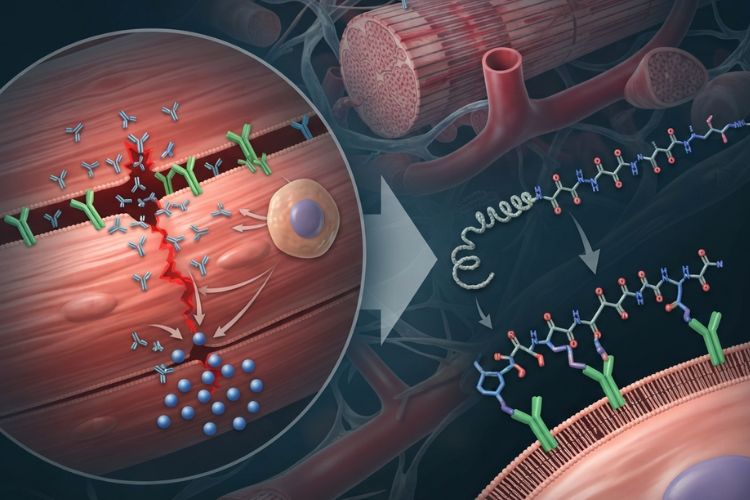
Mechano growth factor, commonly called MGF, is associated with alternative splicing of the IGF-1 gene. In humans, it is generally discussed in relation to the IGF-1Ec splice variant, which attracted attention because its expression can change following mechanical stress.
The terminology can be confusing. Research involving the IGF-1Ec transcript, synthetic MGF E-peptides, and PEGylated versions does not necessarily examine the same biological material. This distinction matters when interpreting PEG-MGF Research, since results involving one form cannot automatically be assigned to another.
What PEGylation Changes
PEGylation involves attaching polyethylene glycol to a molecule. The approach is widely used in peptide and protein science to modify properties such as clearance and Peptide Stability, but the exact effect depends on the molecule and how it is engineered.
The idea behind the peg-MGF peptide is therefore different from simply studying naturally expressed IGF-1Ec. PEGylation changes the construct, and direct pharmacokinetic evidence for this modified form remains limited. General knowledge about PEGylation cannot establish exactly how this particular compound behaves.
Why Mechanical Loading Made MGF Interesting
One reason MGF became a subject of Muscle Research was its response to mechanical activity. A human study examining high-resistance exercise reported an increase in MGF mRNA in exercised muscle from younger participants, while the same significant response was not observed in the older group.
This finding suggested that IGF-1 splice variants may respond differently to mechanical signals. It did not show that the administered compound produces muscle growth. The study measured changes in gene expression after exercise, an important difference when interpreting later PEG-MGF Research.
Satellite Cells and the Repair Process
Skeletal muscle contains satellite cells that normally remain relatively inactive until appropriate signals associated with stress or injury cause them to respond. They can then become involved in the series of events that supports Muscle Regeneration and the maintenance of muscle tissue.
This process has made satellite cells an important part of MGF research. Earlier studies proposed that MGF-related signaling could influence myogenic precursor cell proliferation, raising questions about whether this pathway participates in the early stages of repair following mechanical stress.
What Early MGF Studies Reported
Some early experimental work reported that synthetic MGF E-peptides increased the proliferation of muscle precursor cells. Researchers also proposed that these effects could differ from mature IGF-1, which has established roles in signaling pathways associated with muscle growth and differentiation.
These observations created interest in how different IGF-1-related signals might contribute to Muscle Development. They also became part of the rationale behind later PEG-MGF Research, although findings involving synthetic E-peptides do not provide direct evidence for PEGylated MGF.
Not Every Study Has Produced the Same Result
Later research complicated the early picture. A 2014 study attempted to reproduce reported MGF effects using C2C12 cells, primary human skeletal muscle myoblasts, and primary mouse skeletal muscle stem cells. Researchers did not observe a significant increase in proliferation after exposure to the tested MGF peptides.
The same study did not find that MGF prevented myoblast differentiation. In contrast, mature IGF-1 produced measurable responses in the experimental systems. These findings show why Muscle Research needs replication before a proposed mechanism can be treated as established.
Conflicting results do not make earlier experiments meaningless. Instead, they show that MGF biology is still being worked out and that experimental conditions, peptide design, and the material being studied all matter when evaluating PEG-MGF Research.
Gene Expression Is Not the Same as Muscle Growth
An increase in a particular mRNA after exercise shows that a gene is responding, but it does not by itself demonstrate a change in muscle size. Gene expression, peptide production, cellular signaling, and measurable tissue growth are separate stages that require their own evidence.
This matters when discussing Protein Synthesis. Mature IGF-1 is associated with pathways involved in anabolic signaling, but researchers should not automatically attribute all established IGF-1 activity to an MGF E-peptide or a PEGylated derivative.
The same caution applies to Muscle Development. Observing an exercise-related increase in IGF-1Ec expression can help researchers investigate how muscle responds to loading, but it cannot establish that externally supplied MGF will reproduce the same sequence of events.
Muscle Repair Involves More Than One Signal
Proliferation and Differentiation Are Different Steps
Repairing skeletal muscle requires several coordinated events. Satellite cells may become activated, precursor cells can proliferate, and some cells later differentiate and fuse as muscle tissue is repaired. These stages are controlled by networks of signals rather than one peptide acting alone.
For this reason, Muscle Regeneration should not be reduced to a single MGF pathway. IGF signaling, myogenic regulatory factors, extracellular signals, immune activity, and other processes can all contribute to how damaged skeletal muscle responds.
Where Protein Production Fits In
Building and maintaining muscle proteins is another part of skeletal muscle biology. Protein Synthesis is regulated through established cellular pathways, including signaling associated with mature IGF-1, but the precise contribution of proposed MGF-specific signaling remains debated.
This distinction helps prevent different parts of IGF biology from being combined into one explanation. It is especially relevant when researchers compare naturally occurring IGF-1 products with modified peptide compounds used in laboratory research.
PEGylation Raises Its Own Research Questions
Changing a peptide can affect how it behaves in an experimental system. Researchers interested in Peptide Stability may use structural modifications to examine whether a compound persists differently, but a longer-lasting molecule is not automatically biologically equivalent to its unmodified counterpart.
That leaves several questions for PEG-MGF Research. Researchers still need clearer data on its pharmacokinetics, biological targets, signaling behavior, and whether observations involving other MGF-related materials can be reproduced with the PEGylated compound itself.
What the Evidence Still Needs to Clarify
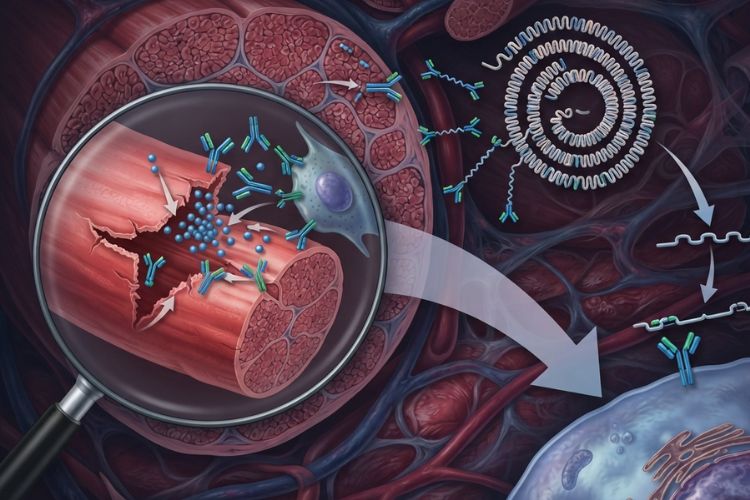
Current evidence leaves an unusual problem. Researchers have documented changes in MGF-related IGF-1 transcripts, while synthetic peptides based on the E-domain have also been tested experimentally. Yet reviews have questioned whether an equivalent free endogenous MGF peptide has actually been demonstrated in biological systems.
There is also disagreement over the cellular effects attributed to synthetic MGF peptides. Better controlled and independently replicated studies could help establish which findings are reproducible and which belong only to specific experimental conditions.
Most importantly, direct human evidence involving PEG-MGF remains lacking. Research involving exercise-induced gene expression or laboratory exposure to synthetic peptides should therefore be described for what it measured rather than used to predict effects in people.
Conclusion
MGF research has given scientists a closer look at how skeletal muscle reacts to mechanical stress and where IGF-1 splice variants may fit into that process. Work involving satellite cells and other muscle cells has also raised important questions about how muscle tissue repairs itself and adapts over time.
At the same time, the evidence is not uniform. Early findings have not always been reproduced, and research on natural IGF-1Ec or synthetic MGF peptides cannot automatically establish the activity of PEGylated MGF.
The most useful way to read the current evidence is to keep these distinctions clear. The biology remains an active area of investigation, with more direct research needed before the effects of these modified peptide compounds can be firmly defined.
FAQs
Is PEG-MGF the same as naturally occurring MGF?
No. PEG-MGF is a modified form designed for research, while naturally occurring MGF is linked to IGF-1 activity in the body. Because they are not the same form, findings from one should not automatically be applied to the other.
Why is MGF studied in skeletal muscle?
MGF-related IGF-1 expression has been reported to change following mechanical loading and muscle damage. This has led researchers to investigate its possible place in muscle repair, satellite cell activity, and adaptation.
What do satellite cells do in skeletal muscle?
Satellite cells are muscle stem cells involved in maintaining and repairing skeletal muscle. Following appropriate signals, they can become activated and contribute to the production of myogenic cells involved in tissue repair.
Has PEG-MGF been tested in human studies?
Research directly examining PEG-MGF in humans is very limited. Most available studies focus on related IGF-1 variants, laboratory cell models, or animal research, so there is still not enough human evidence to draw firm conclusions about its effects.