The peptides used in research are classified as sensitive compounds. As soon as they are created and packaged, their structural integrity will rely solely upon how they are stored. If the peptide is not stored under appropriate conditions, this can affect not only the shelf life but also how correctly the experimental data will be. Also, the peptide would contain many uncontrollable variables, which would make that peptide unusable prior to its viable shelf life.
For scientists and researchers working with peptide compounds on a regular basis, understanding proper peptide storage is not optional. It is a core part of responsible laboratory practice. This guide explains exactly how research peptides are stored in professional settings, what factors matter most, and why getting this right is as important as any other step in the research process.
Why Peptide Storage Conditions Matter
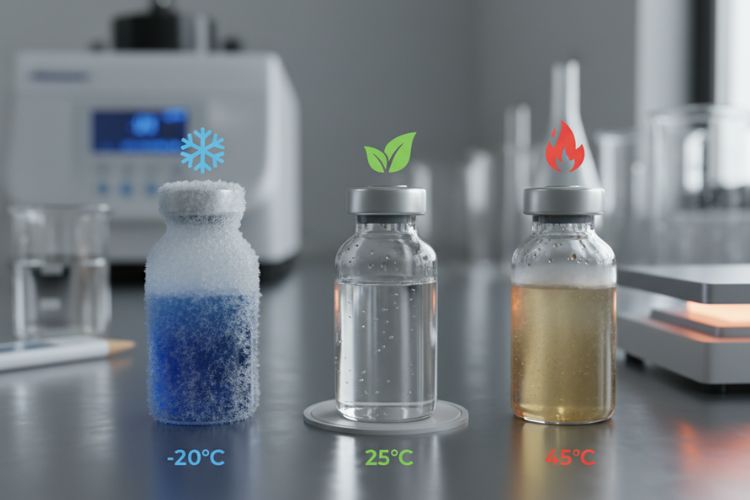
Peptides are made up of a sequence of amino acids linked together by bonds that are stable under normal conditions. The structure of the peptide, however, is very susceptible to different environmental factors, including temperature, humidity, light, and oxygen. Heat, moisture, light, and oxygen are all major factors that have an accelerated effect on the degradation of the peptide. If just one of these factors is not controlled, the sequence of the peptide can become altered; the chemical bonds can become broken; and/or the oxidation can change the behavior of the peptide.
The consequences of poor peptide storage are not always visible to the naked eye. A degraded peptide may look identical to an intact one. The powder may appear the same color and texture, and dissolve normally when reconstituted. But at the molecular level, the compound has changed. Research built on a compromised peptide yields data that cannot be trusted, and in scientific work, untrustworthy data is worse than no data at all. This is why storage protocols in laboratory settings are detailed, deliberate, and strictly followed.
Peptide Storage Temperature: The Most Critical Variable
Temperature is the most important factor when storing peptides because temperature affects the rate of all chemical reactions, including the degradation of peptides. Peptides will degrade more quickly at higher temperatures. Therefore, consistent cold storage is essential to developing a proper cryogenic storage system for peptides.
In most laboratory settings, peptide storage temperature protocols fall into three main categories based on the form of the peptide and how long it needs to be preserved.
- Short-Term Storage at Refrigerator Temperature. For peptides that will be used within a few weeks of reconstitution, storage at 2 to 8 degrees Celsius is generally sufficient. At this temperature, microbial growth is slowed, and chemical degradation is kept to a minimum. However, this level of cold is not suitable for compounds that need to be preserved for months or years without active use.
- Long-Term Storage at Freezer Temperature. For lyophilized peptides not yet in active use, most laboratories store them at -20 degrees Celsius. This is the standard freezer setting in most research environments and provides a stable condition for the majority of peptide compounds over extended periods. At this peptide storage temperature, chemical activity is reduced significantly and structural integrity is maintained far longer than at refrigerator temperatures.
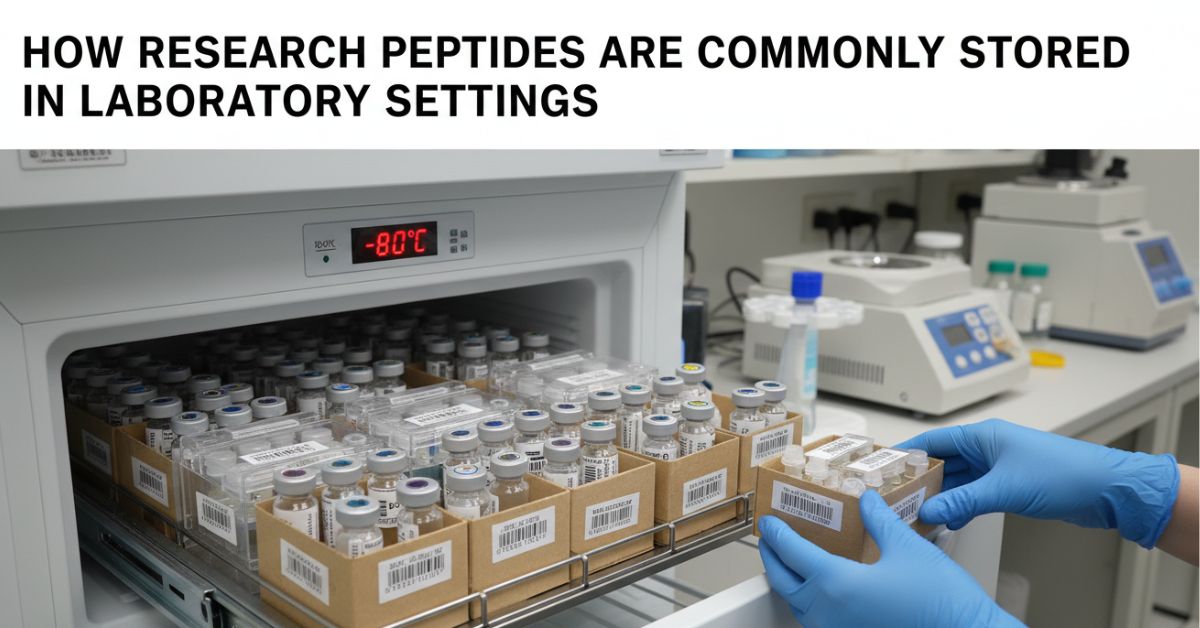
- Ultra-Low Temperature Storage. For particularly sensitive peptides, especially those prone to oxidation or those required for critical long-term studies, storage at -80 degrees Celsius is preferred. This level of cold essentially halts all meaningful chemical activity and provides the most reliable long-term protection available in a standard laboratory setting.
Regardless of the type of method being used for cryogenic storage – whether liquid nitrogen, dry ice, or ultra-low freezers- all three utilize the same principle of maintaining a consistent temperature for prolonged periods of time. Inconsistent or fluctuating temperatures during cryogenic storage would cause Peptides to be damaged by repeated freeze-thaw cycles rather than by slight increases in temperature that are allowed to stabilize over time.
Peptide Refrigeration: Managing Reconstituted Solutions
While lyophilized peptides are relatively forgiving to store, reconstituted peptide solutions require more careful handling. Once a peptide has been dissolved into a liquid solution, the protective advantages of the dry powder format are gone, and the conditions that promote degradation return.
Reconstituted peptide solutions, which are used quickly (within days), are mostly stored under refrigeration (2-8 degrees Celsius) for stability and protected against light. After proper refrigeration, the majority of reconstituted peptide solutions will usually remain stable for several days/weeks.
To minimize instability risks associated with liquid storage, many researchers only buy as much peptide as corresponds to their immediate usage. However, if it is not possible to use the solution immediately, it must be aliquoted and frozen. After aliquoting, every single dose can be processed independently (in terms of freeze/thaw cycles), eliminating problems associated with repeated freeze/thaw cycles on the original sample.
For customers who shop peptides online, it is critical to understand the storage requirements prior to purchasing and/or using the item. An all-too-common and costly mistake made by peptide buyers is to purchase more than they can use within the suitable storage window (time frame).
Light, Oxygen, and Moisture Control
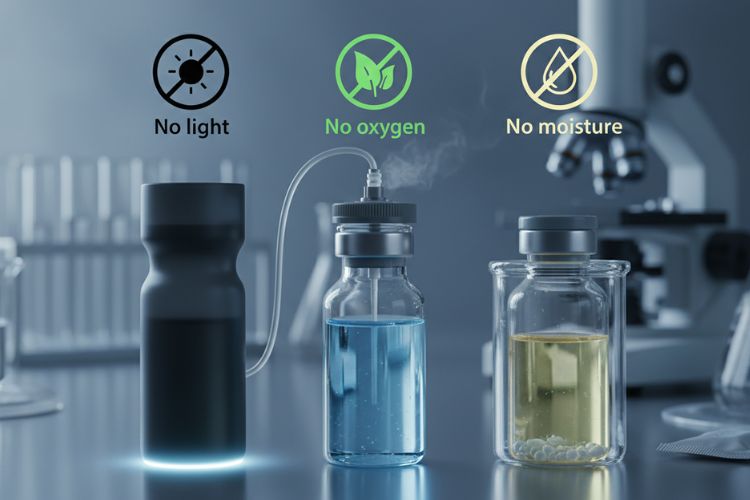
Temperature receives most of the attention in peptide storage discussions, but light, oxygen, and moisture are equally capable of causing serious damage.
Many peptides are photosensitive, particularly those containing aromatic amino acids or disulfide bonds. Prolonged exposure to light can break molecular bonds and alter functional structure. Storage in amber glass vials or opaque containers is standard practice for this reason.
Oxygen promotes oxidation of susceptible amino acid residues such as methionine and cysteine. Lyophilized peptides are therefore typically sealed under inert gas such as nitrogen or argon after manufacture. Researchers minimize open-air exposure during handling and keep reconstituted solutions in sealed containers with minimal headspace.
Moisture is equally problematic. Even brief exposure to humid air when opening a vial can introduce enough water content to begin degradation. Best practice is to allow a vial to reach room temperature before opening, which prevents condensation from forming on the cold powder. A dependable research peptides supplier will seal compounds under inert gas to protect them during transit, but maintaining that protection once in the laboratory is the researcher’s responsibility.
FAQs
What is the recommended peptide storage temperature for lyophilized compounds?
Most lyophilized peptides are stored at -20 degrees Celsius for long-term preservation. Highly sensitive compounds may require -80 degrees Celsius, while actively used compounds can be kept at 2 to 8 degrees Celsius for a few weeks.
How long can peptides be stored before they degrade?
Lyophilized peptides stored at -20 degrees Celsius can remain stable for one to two years or longer when sealed correctly. Reconstituted solutions under standard peptide refrigeration conditions are generally stable for only days to a few weeks.
Why is freeze-thaw cycling a problem for peptide storage?
Each freeze-thaw cycle causes physical stress at the molecular level and increases the risk of oxidation and structural breakdown. Researchers minimize this by aliquoting reconstituted solutions into single-use portions before freezing.
Does packaging affect peptide storage quality?
Yes, significantly. Vials sealed under inert gas and stored in amber or opaque containers protect peptides far better than basic packaging. Verifying a supplier’s packaging standards is an important part of ensuring compound integrity from manufacture through to laboratory use.
Final Thoughts
Researchers can safeguard the integrity of their work through proper peptide storage; therefore, the most basic task researchers have for protecting themselves is keeping the following conditions in mind: keep compounds at low temperature; protect compounds from moisture; protect compounds from light and oxygen during each stage of storage and handling; and the appropriate storage method used for both the lyophilized and reconstituted forms of peptides distinguish laboratories that consistently generate reliable records from those laboratories that consistently produce data that they cannot validate.
Understanding peptide storage temperature ranges, practicing correct peptide refrigeration for solutions, and sourcing from suppliers who take packaging seriously are the three pillars of a sound storage strategy. When each of these is handled with care, research peptides perform exactly as they should.
All products referenced are intended strictly for laboratory and scientific research purposes only, not for human or animal consumption.