Understanding Peptides Purity: A Beginner’s Guide
If you are new to peptide research, you’ll notice a term used by product listings, supplier documentation, and laboratory protocols: Purity. Purity is not just a number printed on the label for marketing, but it is a direct reflection of the reliability of the compound, the consistency in the conditions of the experiment, and whether or not it will be appropriate for serious scientific purposes.
One of the most important foundations to establish as a researcher before opening any vials of peptide will be to understand what purity is in relation to research peptides, how to quantify/measure purity, and why purity can have an impact on your data. This guide contains everything you need to know about purity in simple and clear language.
What Does Peptide Purity Actually Mean?
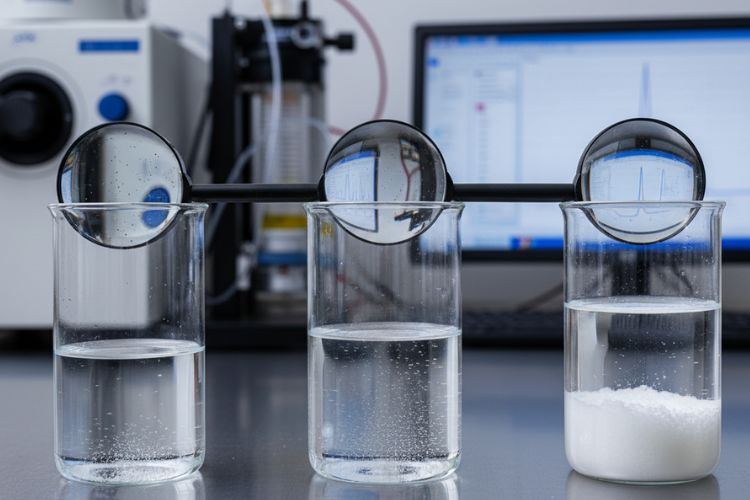
In the simplest terms, peptide purity refers to the percentage of the desired peptide compound present in a given sample relative to all other substances in that same sample. A peptide listed at 98% purity contains 98 parts of the intended compound per 100 parts of total material. The remaining 2% consists of impurities, which can include residual solvents, truncated peptide sequences, reagents from the synthesis process, or other byproducts of manufacturing.
This distinction matters because peptides are synthesized, not extracted from a pure natural source. The synthesis process involves building amino acid chains step by step, and at each step, there is a small probability of error. Incomplete reactions, side reactions, and purification limitations all contribute to the presence of impurities in the final product.
A high purity percentage indicates that the synthesis and purification processes were carried out with precision and that the compound you are working with is overwhelmingly the peptide it is supposed to be. A lower purity percentage means a greater proportion of unknown or unwanted substances are present, which introduces variables into your research that you cannot account for or control.
Why Peptide Purity Is Central to Research Quality
Peptide purity is of great concern to scientists because it is the basis for research integrity; it is not possible to gain accurate, reproducible data from peptides that are not pure. In research, every experimental variable is intended to be a set factor (the amount of peptide, or protein, the specific peptide used, the extent to which that peptide will bind to the biological system). If the sample is impure, the uncertainty of experimental results is inherently increased.
If the sample has a substantial amount of truncated sequences and/or synthetic by-products, the extent to which these contaminants are present will determine how the peptide interacts with the biological system (ex, cells, tissues, etc.) in a manner that is unpredictable. Therefore, the result of an experiment may be interpreted to show a positive outcome when the actual result is an artifact of contamination. In addition, a contaminated result may produce a false-negative result, as the active peptide has been diluted by an impurity. Both scenarios have a detrimental impact on the reproducibility of data.
It is for the above-stated reasons that peptide quality standards are established. These standards create a defined cut-off demarcating which compounds are suitable for use in scientific research and those which are not. Researchers will utilize these peptide quality standards to make procurement decisions, validate their experimental results, and compare their experiment to other similar studies.
Peptides Quality Standards: What the Numbers Mean
Peptide quality is typically quantified by calculating the percentage of purity found in each sample. Each number represents a different classification for the specific type of intended use. By having a clear understanding of what each level represents, researchers will know which grade of peptide will be the most appropriate for their studies.
Research studies rarely utilize peptides that are anything less than 70% pure due to the large volume of impurities in comparison to the volume of the desired compound; therefore, no statistically valid data can be generated. Grades below this level will only be found in mass commercial applications instead of research applications.
Peptides with a purity percentage between 70%-85% can be used for certain types of exploratory and/or preliminary studies if accurate doses are not critical for the study and if the nature of the research is qualitative; however, for studies that need reproducibility and/or quantifiable evaluations, using peptides from this grade creates significant uncertainty in the ability to obtain valid data.
The most widely used research grade falls between 85% and 98% purity, with the upper end of that range being preferred for the majority of controlled laboratory work. Peptides in this range meet the peptide quality standards expected in professional research environments and are the most commonly supplied by reputable manufacturers.
For highly specialized applications, ultra-high purity peptides above 98% are available. These are used in studies where even minor impurities could significantly affect outcomes, such as binding affinity studies, receptor research, or work that requires extremely precise quantification of biological activity.
Choosing the right purity tier is not simply a matter of buying the highest number available. It is about matching the compound to the requirements of the specific research being conducted.
Understanding the Certificate of Analysis for Peptides
One of the most important documents a researcher should request and review before using any peptide compound is the certificate of analysis. A certificate of analysis peptides document is a formal quality control report issued by the manufacturer or an independent testing laboratory, confirming the identity, purity, and composition of the compound in a given batch.
A thorough certificate of analysis peptides report will typically include the peptide name and sequence, the batch or lot number, the purity percentage as determined by analytical testing, the method used to measure purity, and any additional characterization data such as molecular weight confirmation. The most common analytical methods used are high-performance liquid chromatography, which measures purity by separation, and mass spectrometry, which confirms molecular identity by weight.
When evaluating a research peptides supplier, the availability and transparency of certificates of analysis are one of the clearest indicators of quality and credibility. A supplier that readily provides third-party verified certificates of analysis for every batch is one that stands behind the accuracy of their product specifications.
Researchers should treat a missing or vague certificate of analysis as a serious red flag. Without this documentation, there is no independent verification that the compound meets the purity level stated on the label.
How Purity Is Measured in Practice
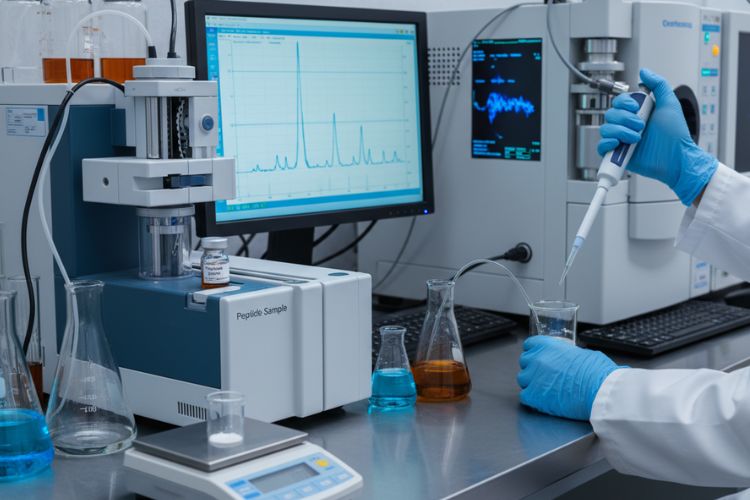
The two most common methods used to assess peptide purity in a laboratory context are high-performance liquid chromatography and mass spectrometry. Most high-quality suppliers use both methods together to provide a complete picture of compound integrity.
High-performance liquid chromatography separates the components of a peptide sample by passing it through a column under high pressure. The resulting chromatogram shows peaks corresponding to different substances in the sample. The area under each peak represents the proportion of that substance in the total sample. Purity is calculated as the percentage of the total peak area attributed to the desired peptide.
Mass spectrometry confirms that the primary compound identified in the chromatogram is actually the intended peptide by measuring its molecular mass. This step rules out the possibility that an unrelated compound happens to produce a peak in the same position as the target peptide on the chromatogram.
For researchers who shop peptides online, understanding how purity is measured gives you the tools to read a certificate of analysis with confidence rather than simply accepting the purity number at face value.
FAQs:
- What is a good purity level for research peptides?
For most controlled research applications, a purity level of 95% or above is considered the appropriate standard. This falls within the peptides quality standards expected in professional laboratory settings and provides sufficient confidence in compound consistency for reproducible results.
- What does a certificate of analysis for peptides document include?
A certificate of analysis peptides report includes the peptide sequence, batch number, purity percentage, the analytical method used to determine purity, and molecular weight confirmation. It should be issued by the manufacturer or an independent testing laboratory and correspond to the specific batch being supplied.
- Can impurities in a peptide affect research results?
Yes. Impurities can interact with biological test systems in unpredictable ways, producing false positives, inconsistent results, or masking the activity of the target compound. This is the primary reason peptide purity is treated as a non-negotiable consideration in serious research.
- How do I verify the purity claims of a peptide supplier?
Ask for the certificate of analysis for the specific batch you are purchasing and confirm that the testing was conducted by an independent or accredited laboratory. Reliable suppliers make this documentation available before purchase, not just upon request after the fact.
Final Thoughts
Peptide purity is not a technical detail reserved for specialists. It is a fundamental concept that every researcher working with peptide compounds needs to understand from the beginning. A strong grasp of peptide quality standards, the ability to read and interpret a certificate of analysis peptides document, and an understanding of how purity is measured will make you a more informed researcher and help you get more reliable results from your work.
Start with the right compound, verify its quality, and the rest of your research stands on solid ground.
All products referenced are intended strictly for laboratory and scientific research purposes only, not for human or animal consumption.