Lyophilized Peptides Explained: Why Freeze-Drying Matters in Research
When it comes to research-grade peptides, quality is everything. And quality does not just come down to how a peptide is synthesized. It comes down to how it is preserved. A peptide that degrades before it ever reaches the lab is a peptide that cannot deliver reliable results. This is precisely why lyophilized peptides have become the universal standard across laboratories, research institutions, and scientific supply chains worldwide.
If you have come across the term “lyophilized” and wondered what it actually means, or why it matters so much, this guide is built for you. No unnecessary complexity, just a clear and thorough explanation of what lyophilization is, how it works, and why freeze-dried peptides consistently outperform every alternative format in a research setting.
What Does “Lyophilized” Actually Mean?
The word “lyophilized” is simply the scientific term for freeze-dried. The two terms describe the exact same process. One is more commonly used in clinical and research settings, while the other is more familiar in everyday language.
Peptides that have been dehydrated by removing moisture using a specific low-temperature cycle are known as lyophilized. The lyophilization process will reduce moisture from the peptide; however, no heat is applied during this process, as this will damage the fragile structure of the peptide molecules. The end result is a finely powdered dry product that has an identical chemical makeup as the original peptide and can be stored indefinitely without altering its chemical Identity. When it is time to use the peptide again, it will require reconstitution before use in a solution.
This distinction is critical because of the heat sensitivity of most peptide molecules and because most peptide molecules will be more unstable when exposed to moisture. Additionally, moisture can accelerate the oxidation and structural breakdown of peptides. Therefore, when moisture is removed from a peptide, it will protect it from degradation, and, as a result, lyophilization is one of the most critical components in producing peptides.
How the Peptide Lyophilization Process Works
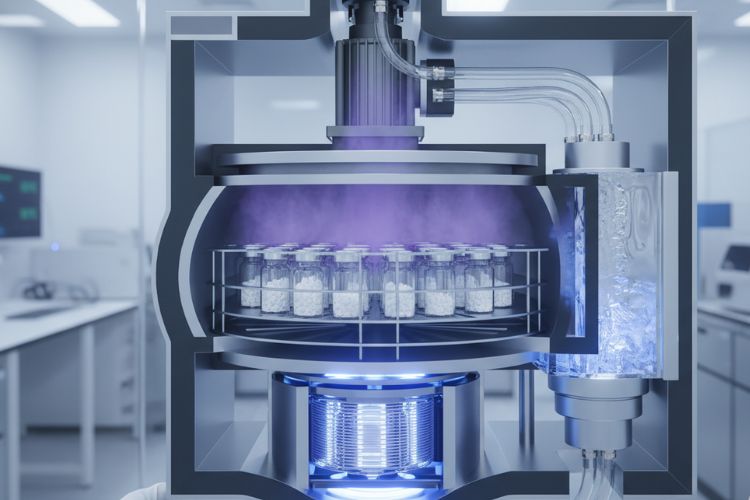
The peptides lyophilization process is complex rather than just a simple matter of storing some items in a freezer. Lyophilization occurs in three steps that fully sequence the phases to create a product that has both long-term storage properties (stable) as well as high quality (i.e., intact).
- Phase One: Freezing The first phase is freezing the peptide solution to an extremely low temperature. The freezing temperature is generally between -40 degrees Celsius and -80 degrees Celsius. The purpose of this rapid-rate freeze is to convert the liquid portion of the peptide solution into ice crystals. Freezing the peptide solution in this manner also locks peptide structure in its current state. A combination of the rate of freezing and freezing temperature will serve to influence the size of the ice crystals that are formed, hence influencing the ultimate texture of the final powder product and solubility characteristics.
- Phase Two: Primary Drying (Sublimation) The peptide lyophilization process revolves around this. The frozen water is transformed straight from ice into vapor under a high vacuum, completely avoiding the liquid phase. We refer to this as sublimation. The molecular structure of the peptide is unaffected because there is never any liquid water present during this phase. Roughly 95% of the moisture content is eliminated during primary drying.
- Phase Three: Secondary Drying (Desorption) The final phase, called secondary drying, is aimed at removing the last traces of moisture that remain chemically bound to the peptide molecules. Secondary drying is accomplished by increasing the temperature continuously under vacuum conditions, which draws off the last amount of moisture remaining. Products created by this final process will generally exhibit less than one percent moisture, which is significantly less than the amount of moisture that is required for having a compound with long-term stability characteristics.
Once complete, the lyophilized peptides are sealed in an inert environment, usually under nitrogen or argon gas, to prevent any reabsorption of moisture or oxygen during storage and transit.
Why Freeze-Dried Peptides Are the Research Standard
The case for freeze-dried peptides is not built on preference. It is built on performance. Here is what sets lyophilized peptides apart in a research environment.
- Stability Over Time Freeze-dried peptides can maintain structural integrity for significantly longer periods than their liquid counterparts, often years when stored correctly, compared to weeks or months in solution. This extended shelf life reduces waste and gives researchers flexibility in planning and executing long-term studies without worrying about compound degradation.
- Precision Reconstitution Because lyophilized peptides are delivered as a dry powder with a known concentration, researchers can reconstitute them to an exact and reproducible concentration every single time. This consistency is essential for experiments that require precise dosing and repeatable conditions across multiple trials.
- Reduced Contamination Risk The absence of moisture eliminates the conditions in which microbial contamination thrives. Freeze-dried peptides arrive in a sterile, sealed format that maintains their integrity right up to the point of use, which is a meaningful advantage in sensitive research environments where contamination can compromise an entire study.
- Shipping and Handling Resilience Liquid peptide solutions are vulnerable to temperature fluctuations during transit. Lyophilized peptides, by contrast, are far more tolerant of the conditions encountered during shipping. This reduces the risk of degradation between the supplier and the researcher’s bench considerably.
For researchers exploring research peptides for sale, the lyophilized format is not just a preference. It is a practical requirement for conducting rigorous, reproducible science.
Reconstituting Lyophilized Peptides: What Researchers Need to Know
Reconstitution is the process of dissolving the lyophilized powder back into a liquid solution for use in research. While it sounds straightforward, doing it correctly is critical to preserving the peptide’s structural integrity and ensuring accurate experimental results.
The choice of solvent depends on the specific peptide in question. Common solvents include sterile water, bacteriostatic water, and acetic acid solutions, with the appropriate choice dictated by the peptide’s solubility profile. Temperature, order of addition, and agitation method all play a role in this process. Gentle swirling is typically preferred over vigorous shaking, which can introduce air bubbles and disrupt the peptide structure.
Once reconstituted, the solution should be used promptly or stored under refrigeration, as the stability advantages of the lyophilized form no longer apply once moisture has been reintroduced.
Researchers who buy research peptides online should always refer to the supplier’s reconstitution guidelines for each specific compound, as the correct approach varies by peptide sequence and intended research application.
What to Look For in a Lyophilized Peptide Supplier
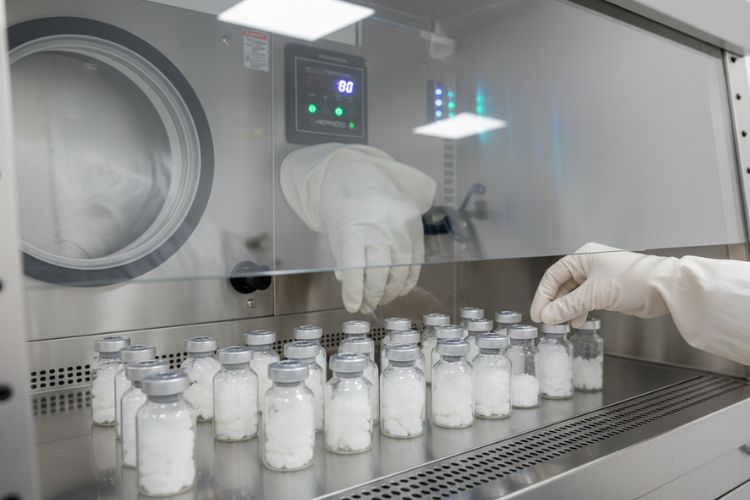
Not all lyophilized peptides are produced to the same standard. The quality of the final product depends on the sophistication of the freeze-drying equipment used, the purity of the starting material, and the rigor of the quality control processes applied throughout manufacturing.
When evaluating suppliers, researchers should prioritize those who offer third-party certificates of analysis, clearly disclose purity levels, and package products in a way that preserves the lyophilized format through transit and storage. Transparency is the clearest marker that separates credible scientific suppliers from those cutting corners at any stage of the process.
FAQs:
What are lyophilized peptides?
Lyophilized peptides are freeze-dried peptide molecules that have had almost all of their moisture extracted using a vacuum-based method. The end product is a stable powder that is perfect for precision application in research settings and long-term storage.
How long do freeze-dried peptides stay stable?
When stored correctly in a sealed, cool, and dark environment, freeze-dried peptides can remain stable for one to two years or longer, far outlasting peptides stored in liquid solution.
What is the peptide lyophilization process in simple terms?
It is a three-stage process in which the peptide solution is frozen, water is removed as vapor under vacuum through sublimation, and residual moisture is drawn out through gentle heating. The result is a dry, stable powder with a fully intact molecular structure.
Can lyophilized peptides be used immediately after delivery?
Yes, once reconstituted with the appropriate solvent according to the supplier’s guidelines. The lyophilized form is the storage format. Reconstitution is what prepares it for active use in the laboratory.
Final Thoughts
The science behind preserving peptides is not just an important aspect of research; rather, it is a fundamental requirement to ensure reliable results. The form of lyophilized (freeze-dried) peptides is currently regarded as the most stable for storing, transporting, and working with research-grade materials. The lyophilization of peptides reduces the main cause of degradation, therefore greatly increasing usable shelf life, plus providing the consistency required by researchers to create accurate and reproducible data with their studies.
When precision is the standard, freeze-dried peptides are always the answer.
All products referenced are intended strictly for laboratory and scientific research purposes only, not for human or animal consumption.